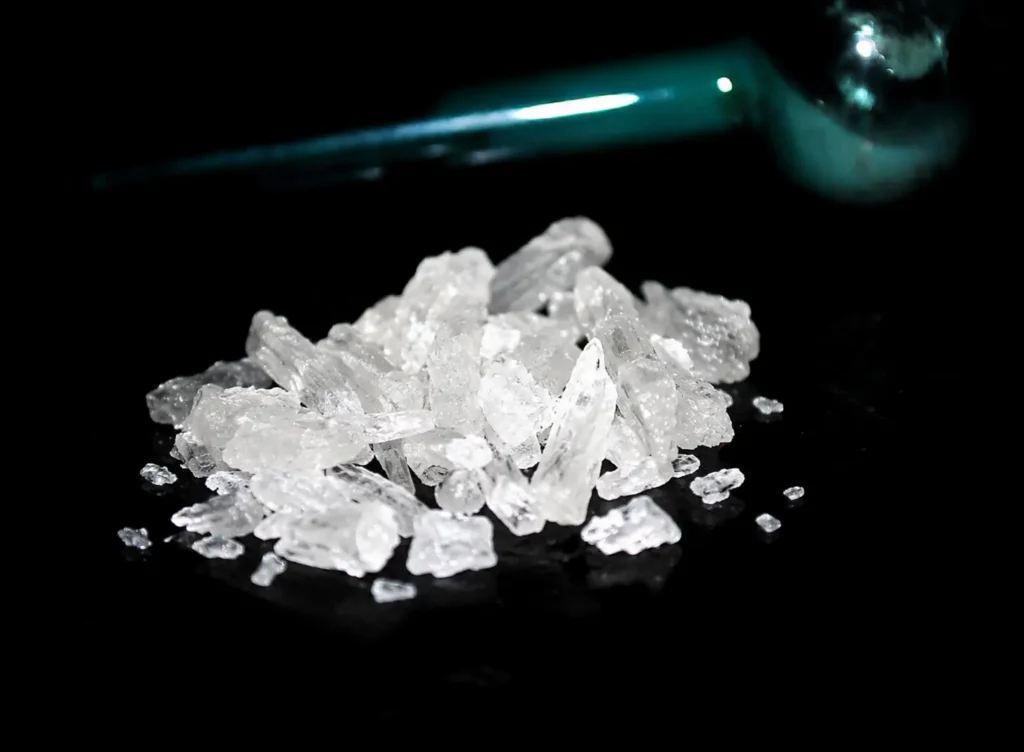
Crystal meth, ice, and methamphetamine all refer to the same drug, and confusion about which term applies to which situation often gets in the way of understanding what treatment actually involves. Methamphetamine is the chemical name; crystal meth and ice both describe the same crystalline, smokable form of it. What makes this drug particularly difficult to treat is not just its effects, but the fact that no FDA-approved medication exists specifically for methamphetamine use disorder, unlike opioids or alcohol. How the addiction develops, what treatment actually looks like without a medication option, and what questions matter most before starting are covered directly below.
Crystal meth, ice, and methamphetamine are the same drug: methamphetamine is the chemical name, while crystal meth and ice refer to its crystalline, smokable form. It works by causing a large, rapid release of dopamine in the brain, which is why tolerance and dependence develop faster than with many other substances. No FDA-approved medication exists specifically for methamphetamine use disorder, so treatment relies primarily on behavioral therapy rather than a medication-first approach; residential programs in Thailand are one setting where this kind of intensive, medication-free behavioral treatment is commonly delivered.
What Crystal Meth, Ice, and Meth Actually Are
Crystal meth, ice, and meth are all names for methamphetamine, a synthetic stimulant. Methamphetamine is the chemical and clinical name; crystal meth and ice both refer to the crystalline form that is typically smoked, distinguishing it from the powder form associated with the street term meth. All three names describe the same drug, and treatment does not differ based on which term someone uses.
Why Crystal Meth Addiction Develops So Fast
Methamphetamine causes the brain to release a much larger amount of dopamine than most other substances, and it does so more directly, by forcing the release of stored dopamine rather than simply blocking its reabsorption. This produces an intense reward response that is disproportionate to almost anything the brain encounters naturally, which is part of why tolerance builds quickly: with repeated use, the brain reduces its own dopamine production and receptor sensitivity to compensate, meaning progressively larger or more frequent doses are needed to produce the same effect.
This mechanism also drives the binge-and-crash pattern commonly associated with methamphetamine use. A person may use repeatedly over hours or days while the drug is active, followed by a crash marked by exhaustion, intense hunger, and low mood as the depleted dopamine system struggles to recover. The crash itself becomes a driver of continued use, since using again is often the fastest way to relieve it, which accelerates the cycle beyond what the initial reward alone would explain.
Tolerance to methamphetamine can develop within weeks of regular use, considerably faster than with many other substances, which means the amount that produced a strong effect early on often stops working within a short period. This drives escalation in both dose and frequency, and it is one of the reasons methamphetamine use disorder can progress from occasional use to daily, compulsive use faster than patterns seen with some other drugs. The same rapid tolerance also means the dopamine system has further to recover once use stops, which is part of why psychological symptoms during early recovery tend to be more pronounced and longer-lasting than the acute physical withdrawal itself.
What Is the 3-3-3 Rule for Addiction?
The 3-3-3 rule is a general guideline some clinicians use to describe early recovery in three phases: roughly three days for the most acute withdrawal symptoms to peak and begin easing, three weeks for the body to establish a new baseline without the substance, and three months for meaningful psychological and behavioral stabilization to take hold. It is a rough guideline, not a fixed timeline that applies precisely to methamphetamine or to any individual, since actual recovery speed depends heavily on use history, severity, and whether co-occurring conditions are present.
Physical and Psychological Effects
Physical effects of ongoing methamphetamine use include significant weight loss from appetite suppression, dental deterioration sometimes referred to informally as meth mouth, skin sores from compulsive picking, and elevated cardiovascular strain from the drug’s stimulant effects on heart rate and blood pressure. Sleep is often severely disrupted for extended periods, even after use stops, since the drug directly interferes with the brain’s sleep-regulating systems.
Psychological effects can include anxiety, paranoia, and in some cases meth-induced psychosis involving hallucinations or delusions, particularly with heavy or prolonged use. These symptoms can persist for days to weeks after stopping, which is one reason unsupervised withdrawal can be psychologically destabilizing rather than simply uncomfortable. Co-occurring mental health conditions, including depression and anxiety disorders, are common among people with methamphetamine use disorder, and treatment that does not screen for and address these tends to see higher relapse rates.
Is Suboxone Used for Meth Addiction?
No. Suboxone, a combination of buprenorphine and naloxone, is specifically approved for opioid use disorder and has no established role in treating methamphetamine addiction, since methamphetamine and opioids work through different mechanisms in the brain. This is a common point of confusion because Suboxone is well known as an addiction treatment medication generally, but its use is specific to opioids. No equivalent medication currently exists for methamphetamine use disorder.
Cardiovascular risk deserves particular attention because it is often underestimated. Methamphetamine significantly raises heart rate and blood pressure with each use, and over time this contributes to a meaningfully elevated risk of heart attack and stroke, even in otherwise young and healthy users, independent of any withdrawal-related risk. This is one reason a medical assessment before and during treatment matters: underlying cardiovascular strain from prior use needs to be identified before an exercise-based treatment component is introduced, not assumed to be absent because someone appears physically fit.
What Is the Hardest Drug to Treat?
There is no single objectively hardest drug to treat, since difficulty depends on the specific mechanisms involved, and different substances present different challenges. Methamphetamine’s particular difficulty comes from the absence of an FDA-approved medication for it, unlike opioid use disorder, which has three approved medications, or alcohol use disorder, which has naltrexone, acamprosate, and disulfiram. Without a medication option to reduce cravings pharmacologically, treatment for methamphetamine relies more heavily on behavioral approaches, which can require more sustained engagement to be effective.
This does not mean methamphetamine addiction is untreatable; it means the treatment approach looks different from opioid or alcohol treatment, with a heavier emphasis on cognitive behavioral therapy, contingency management, and addressing the psychological drivers of use directly, since medication cannot do part of that work the way it can with other substances.
What Treatment for Crystal Meth Addiction Actually Involves
Treatment typically begins with a stabilization phase, since acute methamphetamine withdrawal, while not usually medically dangerous in the way alcohol or benzodiazepine withdrawal can be, involves significant exhaustion, low mood, and sometimes lingering psychotic symptoms that need monitoring. This phase focuses on rest, nutrition, and psychiatric assessment as part of medically supervised detox, rather than a medication-based protocol, since no medication directly treats methamphetamine withdrawal itself.
The main treatment phase, whether delivered locally or at a residential program in Thailand, typically centers on individual counseling delivered at least twice weekly, group therapy, and psychoeducation, using cognitive behavioral therapy as a core approach given the absence of a medication option for this substance specifically. Screening for co-occurring conditions, including depression, anxiety, and any residual psychotic symptoms, happens as part of the initial clinical assessment, with psychiatric oversight available when needed. Physical activity, including supervised fitness, is often built into the weekly schedule as a complement to counseling; regular exercise has some evidence for supporting dopamine system recovery during early abstinence from stimulants, alongside its broader role in mood and sleep regulation. A written continuing-care plan and regular telehealth follow-up after discharge are standard components of a complete program, since sustained follow-up support is a significant factor in maintaining the behavioral changes treatment establishes.
For details on program length, cost, and how admission works specifically for meth and ice treatment in Thailand, the dedicated meth and ice rehab cost and admission guide covers that separately.
What Is Used to Treat Meth Addiction?
No FDA-approved medication currently exists specifically for methamphetamine use disorder, which distinguishes it from opioid use disorder (buprenorphine, methadone, naltrexone) and alcohol use disorder (naltrexone, acamprosate, disulfiram). Research into potential medications, including certain antidepressants and stimulant-based approaches, is ongoing, but none has yet received approval specifically for this indication.
As a result, evidence-based treatment for methamphetamine addiction centers on behavioral therapy. Cognitive behavioral therapy helps identify and change the thought patterns and triggers that drive use. Contingency management, which provides scheduled incentives for verified abstinence, has some of the strongest research support specifically for stimulant use disorders among behavioral approaches. Motivational interviewing helps address ambivalence about change, which is common early in treatment. These approaches are typically combined rather than used in isolation, and delivered alongside general clinical support such as sleep stabilization, nutrition, and monitoring for any residual psychiatric symptoms from the withdrawal period.
Common Questions Before Starting Treatment
Three concerns come up consistently when researching methamphetamine treatment.
Treatment without a medication option is not weaker treatment; it means behavioral therapy carries more of the clinical weight, and consistent engagement with counseling matters more for methamphetamine than for substances where medication does some of that work. How long recovery takes varies significantly by use history and severity, and while acute withdrawal symptoms typically ease within one to two weeks, psychological symptoms including mood instability and cravings can continue for months, which is part of why longer program lengths are often recommended for methamphetamine specifically compared to some other substances. When a co-occurring mental health condition is present, treating only the addiction without addressing the co-occurring condition is one of the more common reasons early treatment attempts do not hold, so an integrated approach that treats both is generally more effective than treating one and waiting on the other.
If methamphetamine use has continued for less than six months without a prior treatment attempt: a shorter program length may be appropriate, and a clinical assessment can confirm this.
If use has continued for years, involved multiple failed attempts to stop, or includes psychotic symptoms: Siam Rehab’s admissions team can assess whether a longer, more intensive residential stay is the appropriate next step.
Frequently Asked Questions
Do people go to Thailand for rehab?
Yes, Thailand has an established private residential treatment sector serving international clients specifically, including for methamphetamine and other stimulant use disorders. The main appeal is a combination of lower cost relative to Western private care and physical distance from the environment where use occurred, which some clients find supports early recovery more than staying local.
How long does meth addiction recovery take?
Acute withdrawal symptoms typically ease within one to two weeks, but psychological recovery, including mood stabilization and reduced cravings, commonly continues for several months. A closer look at what the stages of meth recovery actually involve covers this timeline in more detail, including what tends to happen at each stage.
Can meth-induced psychosis be reversed?
In most cases, yes. Psychotic symptoms triggered by methamphetamine use typically resolve within days to a few weeks after use stops, particularly with clinical support and adequate sleep and nutrition during that period. In a smaller number of cases, particularly with heavy long-term use, symptoms can persist longer and may require psychiatric treatment beyond the acute withdrawal period.
What triggers meth relapse?
Common triggers include contact with people or places associated with prior use, unmanaged stress, and untreated co-occurring conditions such as depression or anxiety that use was originally masking. The dopamine system’s slow recovery timeline also means cravings can resurface unpredictably for months after stopping, which is why relapse-prevention planning typically extends well beyond the initial treatment period.
Is meth addiction a disease?
Methamphetamine addiction is classified clinically as a substance use disorder, a diagnosable medical condition involving changes to brain function, rather than a matter of willpower or moral failing. This framing does not remove personal responsibility from recovery, but it does explain why professional treatment, rather than willpower alone, is generally necessary for sustained change.
Considering Treatment for Crystal Meth or Ice Addiction?
Siam Rehab’s admissions team can review use history and any co-occurring symptoms to help determine the right length and type of treatment.