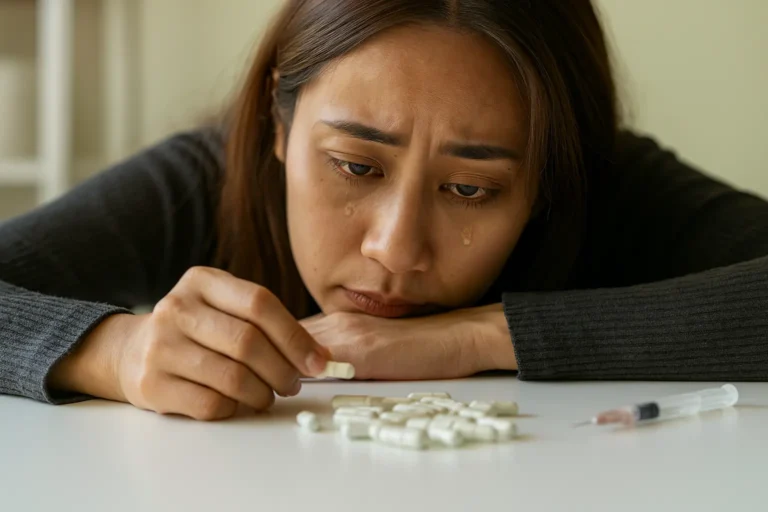
Opioid and opiate addiction treatment in Thailand covers a wide range of situations, from someone using heroin or fentanyl to someone dependent on prescription painkillers like oxycodone, and the right program depends heavily on the specifics of that history. One detail matters more than most searches account for: whether someone is currently on methadone or buprenorphine maintenance therapy, since that changes which programs are actually a clinical fit. What treatment generally involves, which medications are realistically available in Thailand, and how to confirm a specific program’s fit are covered directly below.
Opioid Detox and Treatment in Thailand: What It Involves
Opioid and opiate treatment in Thailand typically starts with medically supervised detox, followed by residential counseling and daily programming over several weeks. Programs vary in which medications they use to manage withdrawal and support recovery afterward, which is why confirming a program’s specific approach matters more than confirming that it treats opioids in general.
Is This Program a Fit for Your Specific Situation?
Opioid and opiate use covers a wide range of situations, and the right treatment fit depends heavily on which of three general categories someone falls into before travel is arranged.
Someone not currently on any medication-assisted treatment, using opioids like heroin, fentanyl, oxycodone, or other prescription painkillers, is generally a straightforward fit for residential, abstinence-based treatment, with detox handled as the first phase of admission.
Someone using heroin, morphine, or oxycontin without a formal maintenance prescription is also generally assessed as a fit, though individual evaluation during the admissions process confirms this before travel, since use history and any existing health conditions affect the assessment.
Someone currently on methadone or buprenorphine (including Suboxone) maintenance therapy is a different situation. These medications are used long-term to manage opioid dependence through daily or near-daily dosing, and this program is not built to manage an active high-dose maintenance regimen alongside residential treatment. This is not a judgment on the value of maintenance therapy, which is a legitimate and evidence-supported treatment approach in its own right; it simply means this specific program’s abstinence-based approach is not the right setting for someone actively maintaining on it. Anyone in this situation is better served starting with a direct conversation with admissions before making any travel plans, since the honest answer may be that a different type of program fits better.
Buprenorphine, Methadone, and Naltrexone: What’s Actually Available
Search results on this topic are inconsistent, and the confusion is worth resolving directly. Methadone and buprenorphine (including Suboxone) are opioid agonist or partial agonist medications used for long-term maintenance therapy, meaning they are taken regularly to prevent withdrawal and cravings while allowing someone to function without using illicit opioids. Availability and regulation of these medications vary by country and by facility, and maintenance therapy itself is a different clinical approach from residential, abstinence-based treatment, which is why a program built around one does not necessarily offer the other.
Naltrexone works differently. It is an opioid antagonist, not an agonist, meaning it blocks opioid receptors rather than activating them, and it carries no potential for dependence or misuse itself. Because of this, naltrexone fits inside an abstinence-based program as a relapse-prevention tool considered after a full detox and opioid-free period, rather than as an ongoing maintenance medication. It is evaluated individually, alongside detox history and current health status, similar to how it is used for naltrexone-based relapse prevention in alcohol treatment, though a longer opioid-free period is required before it can be started safely.
Anyone specifically comparing maintenance-therapy programs against abstinence-based residential treatment should ask directly which approach a given facility actually runs, since the two are not interchangeable and a facility’s general claim to treat “opioid addiction” does not by itself indicate which one is used.
Opiate and Opioid Withdrawal: Timeline and Medical Risk
Withdrawal timing depends on which opioid was used and how long. Short-acting opioids, including heroin and most prescription painkillers, typically produce withdrawal symptoms starting 6 to 12 hours after the last use, peaking around 1 to 3 days, and improving substantially within 5 to 7 days. Long-acting opioids, including methadone, tend to have a delayed onset, sometimes not starting for a day or more, with symptoms that can extend over a longer period.
Early withdrawal typically includes anxiety, muscle aches, sweating, and a runny nose. Peak symptoms often add nausea, vomiting, stomach cramps, and difficulty sleeping. Physical symptoms generally improve within the first week, though psychological symptoms, including low mood, anxiety, and cravings, can continue for weeks or months afterward, a pattern sometimes called post-acute withdrawal.
Unsupervised withdrawal carries real medical risk, primarily because tolerance drops quickly during even a short period of abstinence. Someone who resumes use at a previous dose after several days without opioids faces a meaningfully higher overdose risk than during regular use, since the body no longer tolerates that amount. This is one of the main reasons medically supervised detox is recommended over attempting withdrawal without support: it manages the physical symptoms directly and reduces the chance that discomfort leads to a return to use at an unsafe dose.
Fentanyl adds a separate layer of risk unrelated to withdrawal itself: because it is frequently present, sometimes unknowingly, in other drugs, overdose risk exists throughout active use, not only during withdrawal or relapse.
A short clinical assessment call can clarify what a specific withdrawal timeline is likely to look like based on individual use history. This does not require committing to a program in advance.
How Treatment Works in Residential Care
Siam Rehab, a non-12-step residential program in Chiang Rai, Thailand, begins treatment with medically supervised detox and stabilization, using standardized screening to assess withdrawal risk before a treatment plan is finalized. Cases requiring medical support beyond what the residential facility provides are transferred to a partner hospital for stabilization before returning to the program.
The main treatment phase includes individual counseling delivered at least twice weekly, group therapy, and psychoeducation, with a counselor-to-client ratio of approximately 1:4-5 and an overall staff-to-client ratio near 1:1.3. Naltrexone is considered on an individual basis as part of relapse-prevention planning once detox is complete and the required opioid-free period has passed, alongside counseling and a written continuing-care plan prepared before discharge. Physical activity, including supervised fitness and Muay Thai, is built into the weekly schedule as a complement to counseling, and weekly telehealth continues for twelve weeks after discharge as part of standard continuing care.
Cost of Opioid Addiction Treatment in Thailand
Program fees are set by length of stay rather than a flat daily rate, since longer stays involve deeper clinical work rather than a repeated version of the same detox phase. VAT is included in each listed figure. Two costs are billed separately in every case: any medication needed during detox or for an existing health condition such as depression, hypertension, or diabetes, and any in-patient hospital or clinic care if a client requires it, which is billed directly by the treating hospital rather than by the program. The admission deposit is non-refundable once treatment is confirmed.
A four-week program starts around €8,500, an eight-week program around €16,500, and a twelve-week program around €24,500, with length typically determined by prior treatment history and severity rather than a fixed default. Opioid detox and withdrawal management are included as part of the residential program fee; ongoing maintenance medications such as methadone or buprenorphine are not part of this program’s approach regardless of cost, since maintenance therapy is not a service the program offers.
How to Get Started
Admission follows a fixed sequence, and each step needs to be completed before the next begins.
- Step 1: Submit the admission form and complete a preliminary contact call. This covers substance use history, current medications, and any co-occurring medical or psychiatric conditions.
- Step 2: Complete a clinical assessment and suitability review. This is where current methadone or buprenorphine maintenance status, if applicable, is evaluated directly, alongside other exclusion criteria such as active psychosis or unstable medical conditions.
- Step 3: Pay the admission deposit and arrange travel. The deposit is non-refundable and confirms the place; travel and visa arrangements are coordinated once dates are set.
Common Questions Before Admission
Three concerns come up consistently when researching opioid treatment abroad.
Thailand has licensed facilities offering medically supervised opioid detox specifically because unsupervised withdrawal carries real medical risk, and licensed programs are set up to manage that risk directly rather than leave it to chance. Insurance coverage for residential addiction treatment abroad varies significantly by policy and country, so verifying coverage in writing with the insurer before committing, rather than assuming standard reimbursement, avoids unexpected cost exposure later.
Anyone currently on methadone or buprenorphine maintenance who is unsure whether that rules out residential treatment entirely should know that it does not rule out treatment in general, only this specific program’s approach; other treatment settings, including maintenance-focused outpatient programs, may fit better depending on the goal.
If methadone or buprenorphine maintenance is not currently part of the picture: a clinical assessment call is the next step to confirm program fit before travel is arranged.
If methadone or buprenorphine maintenance is currently part of the picture: Siam Rehab’s admissions team can discuss directly whether this program or a different setting fits the situation better.
Frequently Asked Questions
How much does it cost to treat drug addiction in Thailand?
Private residential addiction treatment in Thailand typically starts around €8,500 for a four-week program and increases with duration, reaching roughly €24,500 for twelve weeks. Medication costs and any in-patient hospital care are billed separately from the base program fee.
Is Thailand good for rehab?
Thailand has an established private residential treatment sector serving international clients, with licensed facilities offering medically supervised detox and daily therapy. The main advantage over a domestic program is distance from the environment where substance use occurred, though it requires international travel that a local program does not.
Does Thailand have methadone clinics?
Yes, methadone maintenance clinics exist in Thailand, typically through hospitals and specialized programs, separate from residential, abstinence-based rehab facilities. A residential program built around abstinence generally does not provide ongoing methadone maintenance as part of its approach, even where methadone clinics exist elsewhere in the country.
How long is rehab in Thailand?
Residential opioid and opiate treatment programs commonly run four, eight, or twelve weeks, with length determined by use history and severity rather than a fixed default. A first treatment attempt is typically assessed differently from a case involving prior relapses or co-occurring conditions, which usually calls for a longer stay.
Can you get Suboxone in Thailand?
Buprenorphine products like Suboxone are regulated differently across countries, and availability through general practitioners is limited compared to some Western countries. For anyone currently maintained on Suboxone, the more relevant question is usually whether a specific facility’s treatment approach includes maintenance therapy at all, since many abstinence-based residential programs, including this one, do not.
Not Sure If This Program Fits Your Situation?
Siam Rehab’s admissions team can review current medications and use history to confirm fit before any travel is arranged.