Authors List


What stayed with me about James was not the relapse itself, but what he did afterward. Instead of tightening control or pretending nothing had happened, he allowed himself to stay exposed. That choice quietly changed the way everyone around him related to their own recovery.
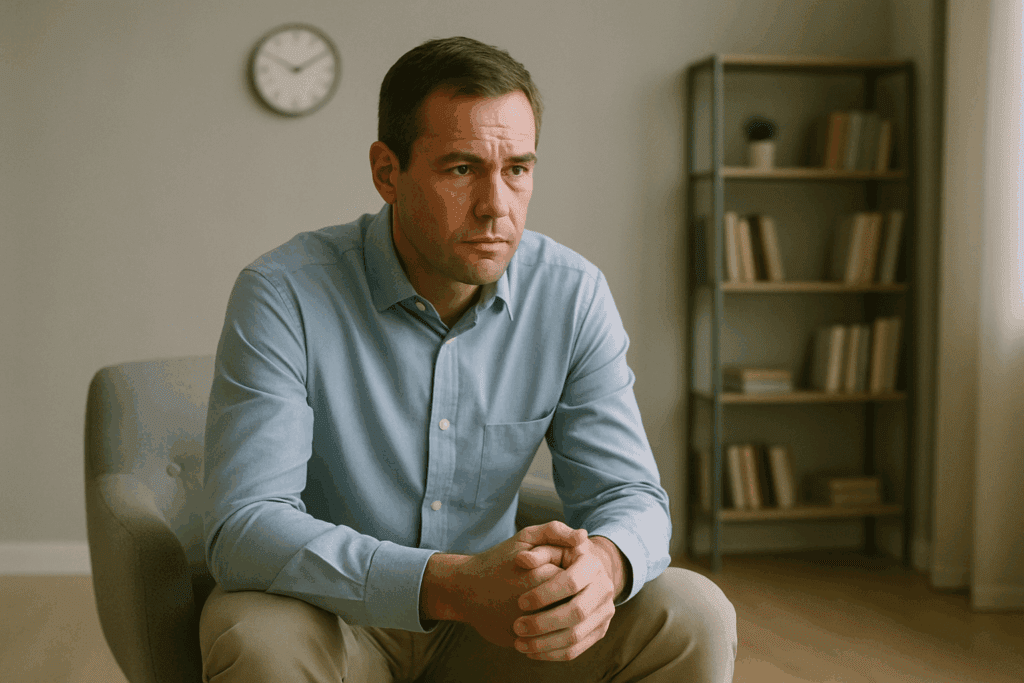
James arrived without visible crisis. No panic, no emotional spillover, no dramatic urgency. He carried himself the way many capable people do when life has trained them to stay composed – steady posture, clear speech, deliberate pacing. If you met him in a boardroom, you would have assumed competence, authority, momentum. He was forty-seven, originally from Eastern Europe, running several businesses, accustomed to responsibility and decision-making. Nothing in his presentation suggested collapse. Yet something inside him had already begun to loosen. Not explosively. Quietly. The kind of internal erosion that goes unnoticed until structure starts to feel hollow.
He mentioned a recent relapse almost casually. No justification, no apology. Just a fact, delivered with the same tone one might use to describe a delayed flight or a missed meeting. “I just need a reset,” he said. It sounded efficient. Logical. Contained. Like a temporary system adjustment. Addiction rarely responds to efficiency. It does not negotiate with intelligence, productivity, or discipline. It works in different layers, ones that do not follow schedules or optimization.
Beneath James’s composure, small fractures appeared. Not in what he said, but in what lingered behind his words. A pause when someone spoke about loneliness. A smile that arrived a fraction too quickly when family came up. A tendency to explain himself even when no explanation was needed. At first, he approached the process the way he approached work. He completed every exercise thoroughly, asked precise questions, organized insights into frameworks. Reflection became another project to complete. It worked on the surface. Less so underneath. Recovery does not reward performance. It softens when space is allowed.

The shift came without ceremony. No confrontation. No emotional collapse. He simply began listening more than speaking. Silence started appearing between sentences – not the awkward kind, but the kind that allows something unpolished to surface before being shaped into a conclusion. He stopped trying to sound resolved. When he spoke, there was less explanation and more uncertainty. Sometimes he admitted he did not yet know what he felt and allowed that to remain unfinished. That alone changed the temperature of the room. Others stopped performing their own insight. Conversations slowed. Depth replaced efficiency.
Leadership emerged differently than he was used to. Not through authority or direction, but through tolerance for discomfort. He modeled staying present when nothing needed fixing. That kind of steadiness quietly invites honesty in others. His exploration extended beyond drinking into patterns around control, self-worth, and the pressure to remain exceptional. He began noticing how structure had protected him while also narrowing his emotional range, how responsibility sometimes masked fear, how vulnerability felt risky precisely because it threatened the identity he had relied on for decades.
As these connections became clearer, he started seeing how long-standing internal tension had shaped his reliance on substances as a regulating tool rather than a root cause. For people navigating similar questions, having a neutral frame for understanding different treatment environments can help orient early decision-making without relying on surface claims or marketing language. Resources such as an independent guide to evaluating rehabilitation options in Thailand exist to support that kind of grounded comparison.
James committed to practices he had once dismissed – writing without editing, breathing without controlling rhythm, sitting without solving anything. None of it felt natural at first. Over time his nervous system softened. His posture relaxed. His responses slowed. Presence gradually replaced management. He did not leave transformed in any dramatic sense. There was no reinvention narrative. What changed was orientation. He carried a more accurate understanding of himself, less rigid certainty, more flexible awareness. Instead of long-term guarantees, he focused on daily attention.
He stayed connected after leaving. Continued attending meetings. Remained honest when things felt unstable instead of hiding behind competence. Others began turning toward him naturally, not because he positioned himself as a guide, but because he embodied steadiness without performance. Today he often supports people who arrive the way he once did – capable, guarded, convinced that vulnerability weakens authority. He does not lecture them out of that belief. He simply demonstrates another way of holding oneself.
No slogans. No rehearsed insight. Just consistency, presence, and a willingness to be seen without armor.
Learn more about our group and individual counseling sessions.


