Traveling with methadone is possible, but the preparation required goes beyond what most prescription medications demand. Whether you are planning a short domestic trip or crossing international borders, the steps you take before departure determine whether your treatment continues without interruption. This guide covers the specific documents to gather, the TSA rules that apply at airport security, and how to arrange dosing when you are far from your home clinic.
Traveling with methadone is possible for patients stable in their treatment program, but requires planning that standard prescriptions don’t: OTP provider approval, TSA notification for liquid doses, and often a guest dosing referral to a clinic at the destination. A 2024 SAMHSA rule allows up to 28 days of take-home doses for stable patients. International travel adds country-specific import rules, since methadone is prohibited or restricted in some destinations even with valid prescription documentation.
Can You Travel While on Methadone?
Yes, you can travel while on methadone. The conditions are stability in your treatment program, provider approval for take-home doses or guest dosing at your destination, and valid prescription documentation. Short domestic trips are manageable for most stable patients. International travel and trips longer than one week require clinic coordination at least four weeks before departure.
What makes traveling with methadone more complex than most prescriptions is the dispensing structure. Methadone for opioid use disorder is distributed through licensed Opioid Treatment Programs (OTPs) – not standard pharmacies. Your ability to receive doses away from home depends on your OTP’s policies and your current take-home eligibility, both of which vary between programs. Your clinic will review your dose stability, recent drug screens, and time in treatment before approving any travel supply.
Methadone vs. Buprenorphine: Different Rules for Different Medications
The two most common medications used to treat opioid use disorder carry different travel requirements because of how they are federally classified. Methadone is a Schedule II controlled substance under DEA rules, requiring dispensing through a licensed OTP and tighter limits on how much can leave the clinic at once. Buprenorphine – sold under brand names including Suboxone – is Schedule III, allowing licensed prescribers to write standard multi-day prescriptions that patients can refill at pharmacies in most countries, without the OTP-to-OTP referral that methadone requires.
The table below shows the differences that matter most for travel planning.
| Factor | Methadone | Buprenorphine |
|---|---|---|
| DEA schedule | Schedule II | Schedule III |
| Dispensing location | Licensed OTP clinic only | Licensed prescriber or OTP |
| Max take-home supply (stable patients) | Up to 28 days (2024 SAMHSA rule) | Up to 30 days via prescription |
| International travel complexity | High – many countries restrict entry | Moderate – fewer entry barriers |
| Guest dosing requirement | OTP-to-OTP referral required | Generally not required |
A SAMHSA regulation finalized in 2024 extended take-home flexibility, allowing stable patients to receive up to 28 days of methadone at a time based on clinical judgment. Individual programs and state regulations still determine how quickly patients earn that level of access. The federal maximum is a ceiling – your clinic’s own policies set your actual eligibility, and the two often differ significantly.
How to Prepare for Travel with Methadone
OTP providers consistently recommend starting the preparation process at least four weeks before a domestic departure and six weeks before any international travel. That window is necessary because guest dosing referrals, doctor’s letters, and insurance pre-authorizations each depend on the previous step – and each takes longer than most people expect.
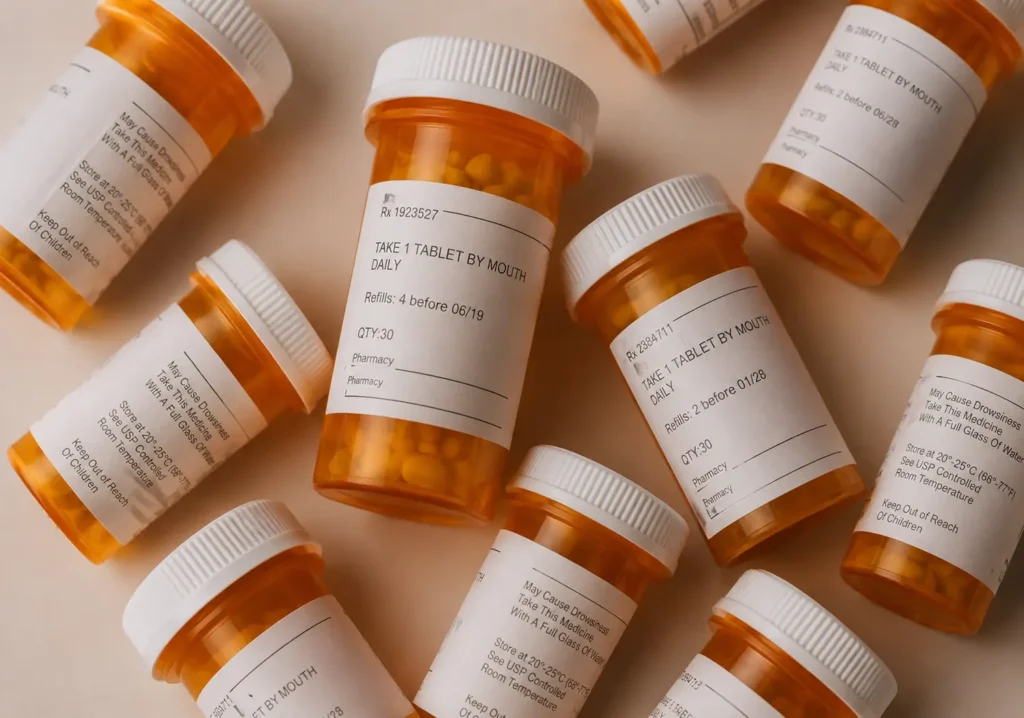
Clearly labeled prescription containers and organized supporting documents are what make traveling with methadone manageable at every checkpoint along the way.
- Step 1: Contact your OTP four to six weeks before departure. Tell your counselor your exact travel dates, destination, and whether any part of the trip crosses an international border. This conversation establishes your take-home eligibility and determines whether a guest dosing referral is needed.
- Step 2: Request a signed letter from your prescribing physician on clinic letterhead. The letter must state your full name, the medication name and current dose, confirmation that it is prescribed for a medical condition, and your clinic’s contact information. Keep one printed copy and one digital backup.
- Step 3: Verify entry rules for every country on your route. This includes layover countries where you will pass through customs or immigration. Some countries prohibit methadone import entirely; others require advance permits issued weeks before arrival. Use each country’s official embassy or health ministry source – not general travel forums.
- Step 4: Confirm your take-home supply covers the full trip plus a buffer. Request doses for your entire trip duration plus two to three extra days for delays. Do not assume a replacement supply will be available at your destination.
- Step 5: Verify your insurance coverage for guest dosing at your destination. Call your insurer before you travel. Guest dosing costs are typically paid out of pocket when the receiving clinic falls outside your plan – this applies to Medicaid in many cases as well.
- Step 6: Pack all medication in carry-on luggage only, in original labeled containers. Never place controlled medications in checked bags. If an airline loses your checked luggage, replacing a methadone supply in an unfamiliar city within a clinically safe timeframe is rarely possible.
Flying with Methadone: TSA Rules and What to Expect at Security
TSA classifies prescription medications as medically necessary, exempting them from the standard 3.4-ounce liquid limit for carry-on bags. Liquid methadone in clearly labeled prescription bottles is permitted in quantities above 3.4 ounces, provided the bottles are presented separately during screening. The step most travelers miss is verbally informing the TSA officer about the liquid medication before the bag enters the scanner – not after the machine alerts.
A registered nurse from Melbourne traveling to a medical conference in Chicago packed her daily liquid methadone doses – sealed and labeled correctly – without alerting the screening agent at the start of the process. The scanner flagged the liquids; a supervisor spent forty minutes reviewing her prescription documentation before clearing her through. She made her connection, but the delay was avoidable. Stating at the very start of screening, “I have a declared prescription liquid,” eliminates that outcome.
For international flights, the rules of your departure country, your destination country, and any layover country where you clear immigration all apply simultaneously. A stopover of even a few hours in a country that restricts methadone can create legal exposure if your medication is not permitted in advance. Confirm the legal status of methadone in every country on your route before finalizing bookings – and check layover rules separately from your main destination.
Guest Dosing: Keeping Your Treatment on Track Away from Home
Guest dosing means receiving your methadone at a licensed OTP other than your home clinic while you are traveling. Your home OTP sends a formal referral and your treatment records to a participating clinic near your destination; that clinic then dispenses doses according to your current prescription and take-home eligibility. The referral must be initiated well in advance – it cannot be arranged in the final days before departure.
Not all patients qualify. Most OTPs will not accept referrals for patients fewer than 90 days into treatment, those with recent positive drug screens, or anyone without a formal referral from their home clinic. Outside the United States and Canada, OTP infrastructure for international guest dosing varies widely. Parts of Europe have established referral protocols; other regions have fewer programs equipped to receive referred patients. This gap is one reason some people planning extended international stays explore medically supervised options that do not depend on OTP availability at their destination.
A clinical consultation between counselor and patient – working through the referral paperwork and destination clinic details together – is what turns a planned trip into a safe one.
[IMAGE PLACEMENT: alt=”counselor and patient reviewing guest dosing referral paperwork for traveling with methadone” – suggested subject: desk setting with a counselor and patient reviewing printed referral forms alongside a list of destination OTP clinics]
If your trip is three days or fewer and you are stable on take-home doses: call your OTP at least two weeks before departure to confirm the number of doses approved for travel and the documents required.
If your trip is longer than three days or crosses an international border: contact your OTP six weeks before departure to begin the formal guest dosing referral process. For those considering a move away from agonist-based therapy toward abstinence-based recovery, Siam Rehab’s international intake program in Chiang Rai, Thailand provides medically supervised detox from opioid agonist medications for English-speaking clients.
What Happens When You Skip the Planning
Methadone has a clinical half-life of roughly 24 to 36 hours, which means withdrawal symptoms typically begin within one to two days of a missed dose. The symptoms – muscle cramps, severe insomnia, anxiety, and sharp cravings – worsen with each additional day without medication. Clinically, missing three or more consecutive doses places patients at significant relapse risk. Elevated stress during travel directly affects recovery-related decision-making, and a missed dose compounds that pressure in ways that are hard to manage in an unfamiliar place.
Arriving at a guest clinic without prior referral documentation is almost always refused. Airport security can and does confiscate unlabeled or poorly documented controlled substances, regardless of the traveler’s prescription status. In countries with strict drug import laws, attempting to bring methadone across a border without the required permits can carry legal consequences that go well beyond a missed flight.
A 34-year-old man from Houston planned a two-week trip to the United Kingdom after starting methadone treatment earlier that year. He called his OTP eight days before departure to request a guest dosing referral and was told his program did not accept referrals for patients under 90 days in treatment – he had been enrolled for 62 days and lacked take-home eligibility as well. The trip was postponed. Had he raised the question of travel during his first month in treatment, the eligibility timeline would have shaped his departure date rather than canceled the trip entirely.
If you have not yet spoken to your OTP about an upcoming trip, contact them today. Every day before departure is time available for documentation – not last-minute problem-solving. Substance use patterns in recovery are sensitive to treatment disruptions, and missed doses during travel are among the most preventable.
Frequently Asked Questions
Can you travel while on methadone treatment?
Yes, travel is possible for patients who are stable in their program and have made advance arrangements with their OTP. Short domestic trips are generally manageable with take-home doses and proper documentation. International travel requires additional preparation, including confirming that your destination country permits methadone entry and completing the guest dosing referral well before departure.
What documents do I need to fly with methadone?
Carry your medication in its original labeled container, a copy of your current prescription, and a signed letter from your OTP on clinic letterhead stating your name, medication, dose, and medical indication. Store these with your travel ID for easy access at security. For international travel, you may also need advance import permits from destination country health authorities.
Can you take liquid methadone on a plane?
Yes. TSA classifies prescribed medications as medically necessary, exempting liquid methadone from the standard 3.4-ounce carry-on rule. Keep it in its original sealed, labeled bottle, place it in your carry-on bag, and inform the TSA officer at the beginning of screening that you have a declared prescription liquid. Presenting it separately for inspection speeds the process significantly.
What is guest dosing and how does it work?
Guest dosing is the process of receiving your methadone at a licensed OTP other than your home clinic while traveling. Your home OTP sends a formal referral and treatment records to a participating clinic near your destination, which then dispenses doses per your prescription. Most programs require at least 90 days of treatment and a recent clean drug screen before accepting referred patients.
Can I take methadone to another country?
It depends on the destination. Some countries allow entry with valid prescription documentation; others require advance import permits issued weeks before travel; a small number prohibit entry of methadone entirely. Verify rules for every country on your itinerary – including layover countries – through official embassy or health ministry channels. Enforcement varies, and general internet advice is not reliable for this purpose.
How much methadone can I take on vacation?
A 2024 SAMHSA rule allows stable patients to receive up to 28 days of take-home doses, subject to their program’s clinical judgment and applicable state regulations. Most programs grant extended take-home access incrementally based on treatment progress. How much your OTP will approve for a specific trip depends on your individual record – confirm your exact eligibility before finalizing any travel bookings.
What are the travel restrictions for buprenorphine?
Buprenorphine carries fewer travel restrictions than methadone because it is Schedule III and can be prescribed through standard licensed providers rather than OTPs only. Most stable patients can receive up to a 30-day supply, and many countries do not require advance permits for entry. For longer trips or travel to countries with stricter drug laws, carry a doctor’s letter and verify destination-specific rules before departure.
Contact your OTP today and give them your travel dates, destination, and trip length. That single conversation starts the documentation process, confirms how many take-home doses you are eligible to carry, and – for international travel – initiates the guest dosing referral that keeps your treatment uninterrupted while you are away. Siam Rehab in Chiang Rai, Thailand provides medically supervised detox from opioid agonist medications for English-speaking international clients; details are available on their international intake page.


