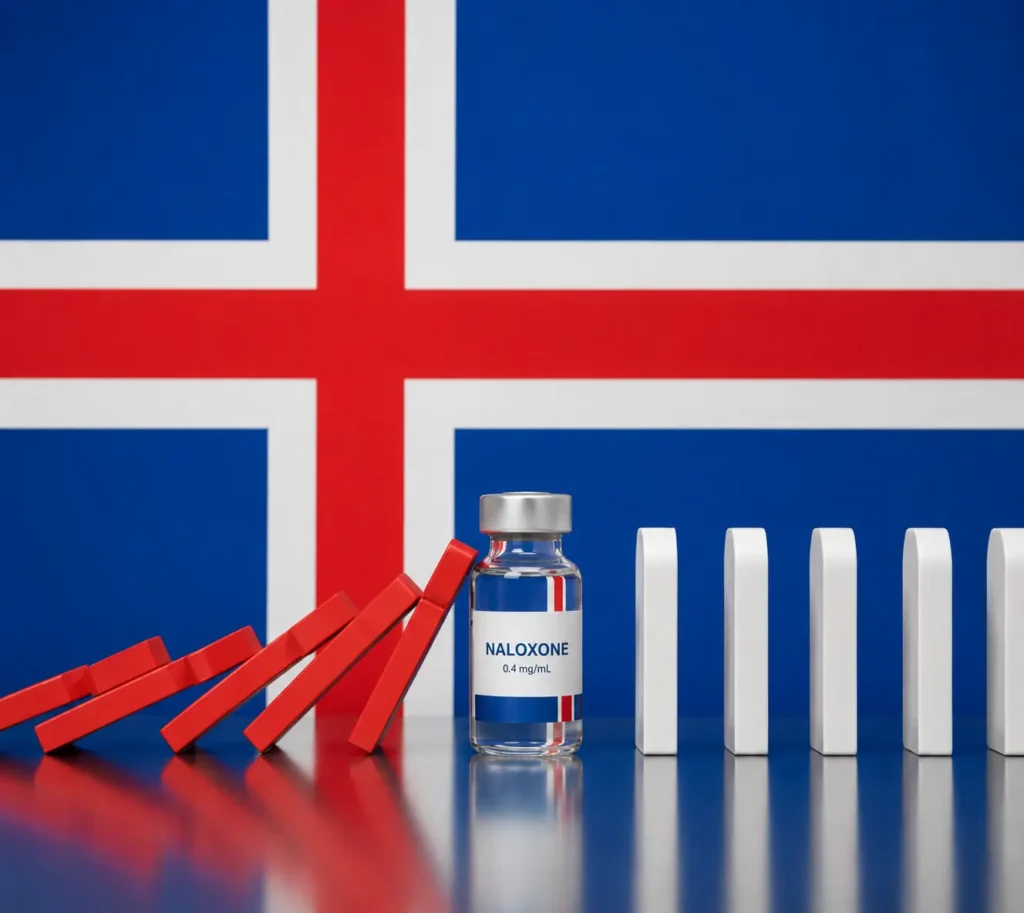
For most people in Iceland who need residential addiction treatment, the path forward involves one institution: SÁÁ, the National Centre of Addiction Medicine, and its detox hospital Vogur in Reykjavík. When that system has a waitlist running into weeks or months, and the nearest private European alternatives carry costs that most families cannot absorb, overseas residential treatment becomes a practical question rather than an exotic one. This page outlines what treatment options exist for people from Iceland and how residential care abroad compares on the factors that matter most.
When Local Treatment in Iceland Is Not Available Quickly Enough
Drug and alcohol rehab in Iceland is available through the public system at no cost, but residential admission to Vogur Hospital is not immediate for most adults – documented research on Iceland’s treatment system shows a waitlist of several hundred people at any given time. For someone whose situation requires residential care now rather than in several weeks, that gap defines the decision. Private overseas residential rehab is the option most commonly used when public capacity is delayed and the cost of European private facilities is beyond what the family can arrange at short notice.
Addiction Treatment in Iceland – What the Local System Covers
Iceland’s addiction treatment system is built around SÁÁ, which operates Vogur Hospital for inpatient detox and residential care, alongside outpatient services at several locations in Reykjavík and Akureyri. The treatment model integrates addiction care within general health services, covered by Icelandic Health Insurance. For people who qualify and can wait for a place, the quality of care at Vogur is documented and evidence-based.
The practical constraint is capacity. The Nordic Welfare Centre’s research on Iceland’s addiction treatment system records that Vogur admits approximately 2,100 to 2,200 patients annually, with a waitlist that has reached several hundred at a time. Priority is given to first-time treatment seekers and those under 25. For adults with a longer history of use or a previous treatment episode, the wait can extend to several weeks.
Iceland’s treatment gap connects directly to overseas residential rehab as a structural solution because the public system’s capacity was not scaled to meet adult demand at the same time as the country’s teen prevention model achieved its well-documented results. Iceland is recognized internationally for the “Iceland Model” – the community-based prevention programme that cut adolescent drug and alcohol use dramatically from the late 1990s onward. That success has made Iceland appear to have resolved its drug problem in a way that has partially obscured a different reality: residential capacity for adults in crisis has never matched what the prevention model suggests the country achieved. The teen problem was addressed. The adult residential gap remained. This is why Icelanders have sought treatment abroad since at least 1975, when the country’s first documented residential alcohol patient traveled to Freeport Hospital in New York because no comparable facility yet existed at home. Overseas treatment is not a departure from Icelandic healthcare culture – it is part of how Iceland has always handled conditions that its domestic system cannot serve at scale.
Comparing Treatment Options Available to People from Iceland
People from Iceland evaluating addiction treatment typically face three realistic paths, and the differences between them are significant enough to determine which is actually usable in a given situation.
The public SÁÁ/Vogur system provides medically supervised detox and residential treatment at no cost, with evidence-based clinical care. Its constraint is time. For someone who has not been in treatment before and meets priority criteria, admission can be relatively prompt. For others, a wait of several weeks or longer is realistic, and outpatient follow-up rather than residential admission may be what is offered initially.
European private residential facilities serving Icelandic clients operate on immediate admission, but the cost is documented to reach extremes that few families can absorb without substantial financial planning. Reporting on Icelandic addiction treatment abroad has cited rates at some European private facilities as high as $220,000 per month. At that level, the cost is not a consideration – it is a disqualifier for most households.
Overseas residential treatment in Thailand operates on immediate or near-immediate admission, with program costs that are a fraction of European private equivalents. The clinical model is residential and English-language, which matters for Icelandic clients whose treatment needs require sustained engagement with a therapeutic team rather than a short detox admission. Distance is a real factor but not the dominant one – the comparison is less “close to home vs far away” and more “available and affordable vs not available or not affordable.”
Private Rehab Abroad from Iceland – Cost Comparison
Private rehab abroad from Iceland involves a substantial cost difference between European and Asian options. Reporting on the Icelandic treatment market has documented European private residential rates as high as $220,000 per month. Residential programs in Thailand, including those serving Icelandic and other Nordic clients, operate at a fraction of that figure – typically comparable to or below what a single month at a mid-range European private facility would cost for a 60 to 90-day program. A detailed cost breakdown for residential treatment in Thailand is available at the rehab cost and international admissions guide.
If you have confirmed that the SÁÁ waitlist does not match your timeline and want to understand what overseas residential treatment would involve specifically: the admissions team can provide a cost estimate and clinical fit assessment with no commitment required before you decide.
Residential Treatment in Thailand – What It Involves for Icelandic Clients
Iceland and Thailand addiction treatment are connected by a practical bridge: residential care that is immediately accessible, delivered in English, and priced within reach of families who cannot absorb European private costs. At Siam Rehab in Chiang Rai, Thailand, the residential program runs from 28 to 90 days depending on clinical assessment, and includes medically supervised detox where clinically indicated, individual and group therapy using evidence-based approaches including CBT, structured daily programming, and an aftercare plan developed before discharge. The clinical team operates in English, and the program accepts international clients from Nordic countries including Iceland.
The program is not marketed as a luxury retreat. It is a licensed residential treatment facility operating under Thai Ministry of Public Health regulation, with a documented clinical governance structure and outcome monitoring. Clients from Iceland and other Nordic countries have the same access to the program as those from Australia, the UK, or North America – the geographic distance is a logistics question, not a clinical one.
When someone contacts SÁÁ and is told that residential admission will take several weeks, and then calls European private facilities to find that costs are well beyond what the family can arrange, Thailand becomes the option that resolves both constraints simultaneously. That sequence – encountering the public waitlist, ruling out European private on cost, identifying Thailand as the path that is both immediately accessible and financially realistic – is the pattern that typically brings Icelandic clients to residential programs abroad. It is not an impulsive or uninformed decision. It is a structured response to a specific set of constraints that Iceland’s own treatment system does not resolve.
What Residential Rehab in Thailand Costs Compared to Iceland’s Options
Residential rehab in Thailand for Icelandic clients costs significantly less than private European alternatives and is structured as a fixed residential fee covering accommodation, clinical care, therapy, and meals rather than itemized daily rates. Exact program costs depend on duration and are confirmed at clinical assessment – the admissions process establishes the appropriate program length before any financial commitment is made.
For reference: the European private residential market serving Icelandic clients has been reported to include facilities at rates reaching $220,000 per month. A 60 to 90-day program in Thailand – which is typically the clinically recommended minimum for established dependence – will cost substantially less than a single month at the upper end of the European private market, often while providing more intensive therapeutic programming than shorter European options.
Icelandic Health Insurance does not typically fund overseas addiction treatment at non-EEA facilities. Treatment in Thailand is self-funded in most cases. For clients evaluating budget, the full cost and admissions guide covers the structure of residential pricing, what is included, and how to approach financial planning for an international program.
How to Start the Admissions Process from Iceland
Starting the admissions process from Iceland involves four steps. The full pathway from first contact to arrival in Thailand can typically be completed within a few days once clinical fit is confirmed.
- Step 1: Contact the admissions team for an initial assessment call. This is a clinical conversation, not a sales call. The team asks about substance use history, medical background, and what previous treatment has involved. It is confidential and carries no commitment to proceed. See the international admissions guide for what to prepare.
- Step 2: Complete the clinical intake documentation. Submit medical history, current medications, and any co-occurring mental health conditions. This allows the clinical team to confirm whether the program is appropriate and identify any pre-admission requirements such as a medical clearance.
- Step 3: Arrange travel from Reykjavík to Chiang Rai. The most practical routing is Reykjavík (KEF) to Bangkok (BKK) via London Heathrow or Copenhagen, then a domestic connection to Chiang Rai. Total travel time is typically 16 to 18 hours. A transfer from Chiang Rai airport to the facility is arranged by the admissions team.
- Step 4: Arrive and begin assessment on day one. A medical and clinical assessment takes place on arrival. Medical detox, where indicated, begins the same day. The full program schedule starts once the initial assessment is complete.
Common Questions About Going Abroad for Treatment from Iceland
The most common concerns from Icelandic clients and families considering overseas residential treatment involve distance, clinical credibility, and what happens if the situation changes during treatment. These are practical questions that deserve direct answers.
Flight Logistics from Reykjavík to Treatment in Thailand
Travel from Reykjavík to Chiang Rai, Thailand involves one connecting flight – typically through London Heathrow or Copenhagen – for a total journey time of 16 to 18 hours. This is comparable in total travel time to reaching some European private facilities from Reykjavík when ground transport is factored in. Iceland’s geographic position means that any residential treatment outside the country involves meaningful travel; Thailand adds distance but not a categorically different level of logistical complexity than Switzerland or southern Europe.
Is Rehab in Thailand a Credible Clinical Option for Icelanders
Rehab in Thailand is a credible clinical option for Icelanders seeking English-language residential addiction treatment with medical supervision, because Thailand’s established residential treatment sector serves a substantial international client base under Ministry of Public Health licensing. The clinical model at evidence-based residential programs in Thailand – individual therapy, group work, medical detox where indicated, structured daily programming – matches what would be expected from a mid-to-high quality European private residential facility, at significantly lower cost. Icelandic clients comparing Thailand against Nordic private options should request governance documentation – licensing, clinical staffing, and emergency protocols – from any facility under consideration, as standards vary.
IF your situation is that SÁÁ has confirmed a multi-week waitlist and the timeline does not fit: contact an overseas admissions team for a clinical assessment before arranging anything else – the assessment confirms whether the program is appropriate and what documentation is needed for travel, without requiring any financial commitment.
IF European private costs have ruled out the nearest overseas options and you need a residential program that is both immediately accessible and within the range of what the family can arrange: programs such as Siam Rehab in Thailand are designed specifically for this situation – international clients who need residential care without a waitlist and without European private pricing. The admissions team can confirm availability and program fit within 24 hours of first contact.
Frequently Asked Questions
Is there a drug problem in Reykjavik?
Yes. Reykjavik and Iceland more broadly have seen increasing cocaine use – described in reporting on Icelandic addiction as a growing public health concern – alongside established alcohol dependence and prescription opioid misuse. Iceland’s overdose death rate is among the higher figures in Northern Europe, and its rates of prescription opioid misuse are documented as above the Nordic average.
Is alcoholism a significant problem in Iceland?
Alcohol dependence is the leading reason for admission to SÁÁ’s treatment system, accounting for the majority of registrations at Vogur Hospital. Iceland has historical patterns of heavy alcohol consumption tied partly to spirits-focused drinking culture. The SÁÁ annual report records that around 10% of Icelandic men between 15 and 64 have sought treatment for alcohol or drug addiction at the national centre at some point in their lives.
How long is the wait for residential treatment at Vogur in Iceland?
Published research on Iceland’s addiction treatment system documents a waitlist of several hundred people at Vogur Hospital at any given time. Wait times vary by clinical priority – people entering treatment for the first time have historically been prioritized, as have those under 25. For adults with previous treatment episodes, a wait of several weeks or more is realistic. Exact current wait times require direct contact with SÁÁ admissions.
Does Icelandic Health Insurance cover addiction treatment abroad?
Icelandic Health Insurance covers treatment at SÁÁ within the domestic system. Coverage for overseas treatment at non-EEA facilities, including those in Thailand, is not typically available under standard health insurance arrangements. Treatment abroad is generally self-funded. Some Icelandic clients with private supplementary insurance may have partial coverage for overseas medical care – verifying this directly with your insurer before committing is the recommended step.
How do you address addiction without going to residential rehab?
Outpatient counseling, structured group programs, and community support through AA or NA are used by many people with less severe dependence. SÁÁ’s outpatient centre in Reykjavík provides individual and group therapy without residential admission. These options work well when physical dependence is moderate, home circumstances are stable, and the person has not relapsed repeatedly after outpatient attempts. For established physical dependence – particularly on alcohol or benzodiazepines – residential care with supervised detox is typically the safer starting point.
Considering Overseas Treatment from Iceland and Want to Understand the Options?
When Icelanders contact Siam Rehab in Chiang Rai, Thailand, the admissions team can confirm clinical fit and program availability – no commitment required before the assessment call.


