
FIFO work in Australia is associated with higher rates of risky drinking, psychological distress, burnout, and substance misuse linked to isolation, long roster cycles, sleep disruption, and high-pressure work environments. For some workers, these patterns gradually develop into alcohol or drug dependence that affects relationships, mental health, and long-term stability.
Why FIFO Work Can Increase the Risk of Addiction
There is something particular about the structure of fly-in fly-out work that makes it harder than most people outside the industry appreciate. It is not just that the hours are long or the conditions are harsh — it is that the whole rhythm of life becomes shaped around the roster. Two weeks on site in the Pilbara or out in a Queensland mining corridor. A week or two back in Perth or Mackay or wherever home is. Then back again. That cycle, repeated across months and years, quietly erodes the normal anchors that most people rely on to stay stable: consistent sleep, daily routines, close relationships, a sense of ordinary life continuing around you.
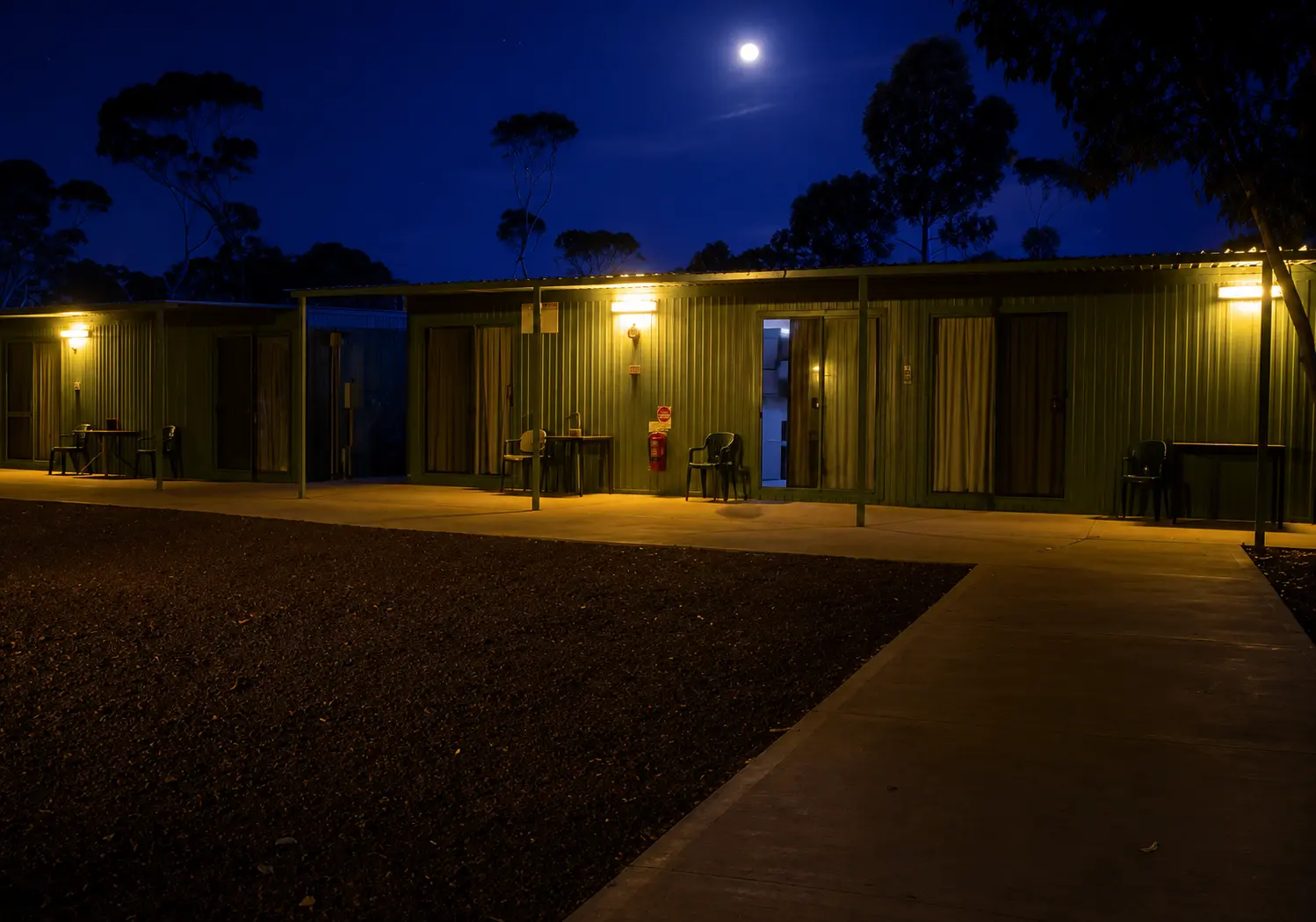
In remote mining camps across Western Australia — from the Pilbara to the goldfields around Kalgoorlie — and in Queensland’s Bowen Basin, the environmental conditions compound the psychological pressure. Workers are housed with colleagues, eat in the same mess hall, sleep in demountable accommodation, and spend off-shift hours in a narrow social world that is entirely work-adjacent. There is little privacy, limited access to natural social outlets, and a cultural expectation — reinforced across many years of Australian mining culture — that men especially should push through discomfort without drawing attention to it. The “work hard, play hard” framing is not just a cliché. It describes a genuinely embedded value system that equates toughness with silence and decompression with drinking.
Sleep disruption is a persistent feature of FIFO life that is rarely taken seriously enough. Long shifts, irregular start times, artificial lighting in camp accommodation, and the physiological effects of roster transitions all interfere with sleep quality over time. Poor sleep over long periods can increase anxiety, make people more irritable, and make alcohol or drugs feel like the quickest way to switch off and calm down. Workers who would normally handle stress reasonably well can start relying more heavily on alcohol or drugs once exhaustion becomes part of everyday life.
Emotional suppression sits at the heart of a lot of what goes wrong. In many FIFO workplaces — particularly in the resources sector across WA, Queensland, and the Northern Territory — there is an enduring cultural norm that equates emotional expression with weakness. Blokes who are struggling with loneliness, anxiety, or relationship problems are far more likely to stay quiet about it than to raise their hand. Over time, stress, loneliness, and anxiety can build up quietly, while alcohol or drugs gradually become the main way some workers try to cope with it.
Boredom during off-shift hours plays a more significant role than is often acknowledged. Remote sites offer few meaningful alternatives to drinking. Workers who are exhausted but unable to sleep, isolated from family and friends, and surrounded by a social environment where having a few beers after a shift is the default activity, gradually normalise a level of consumption that would look concerning in any other context. That normalisation can persist long after a worker returns home.
What makes FIFO workers more vulnerable to alcohol and drug problems? The combination of roster-driven social isolation, emotional suppression reinforced by masculine workplace culture, chronic sleep disruption, limited off-shift activities in remote environments, and the binge-recovery pattern built into swing cycles creates conditions where alcohol and substance misuse can develop gradually and remain hidden for years. High disposable income with limited spending opportunities in camp settings can also accelerate consumption patterns during off-swing periods.

Before looking at how alcohol specifically plays out in FIFO culture, it helps to know what alcohol dependence looks like more broadly. Our guide on signs of alcohol addiction covers the physical, behavioural, and social markers, useful as a reference point before this section gets into the FIFO-specific patterns.
Alcohol Use in FIFO Culture
Alcohol is woven into FIFO culture in ways that can be genuinely difficult to disentangle from ordinary social behaviour. Coming back from site after a two-week or four-week swing, there is often a powerful pull toward drinking — not out of recklessness, but because the roster creates a particular kind of deferred pressure. The work is intense, many workers bottle things up just to get through the swing, and drinking can quickly become the easiest way to switch off afterward. The problem is that what starts as a way to unwind can slowly turn into the automatic response to stress, boredom, or coming off swing: the end of a swing, the beginning of leave, a difficult phone call with a partner, a bad week on site.
Off-swing periods can themselves become dominated by drinking in ways that partners and families often find alarming but workers may not register as problematic. A week or two of heavy drinking at the end of each roster cycle gets rationalised as earned relief. “I worked hard for that.” “I’ve been on site for four weeks straight.” Within FIFO life, that way of thinking can start to feel normal, which is part of why the pattern becomes hard to break. The problem is that heavy drinking during leave periods still takes a toll. It affects the quality of time spent with partners and children, it interferes with the recovery that the break is supposed to provide, and over time it trains the brain to associate the home environment with heavy consumption.
Social pressure in camp environments reinforces drinking in ways that can be difficult to resist, particularly for workers new to the industry. The mess hall closes, there is nothing much to do, someone is heading to the wet mess or cracking open a six-pack in their room, and saying no means sitting alone in demountable accommodation with limited phone reception and nothing to occupy the next three hours. Drinking is a normal part of social life in many remote camps, but over time that can make heavy drinking start to feel ordinary even when it is becoming a real problem.
The impact on relationships deserves more honest attention than it typically gets. Partners back in Perth, Brisbane, or regional towns are often managing households, children, and their own anxiety about a partner who arrives home exhausted and emotionally distant, spends a significant part of leave drinking, and then disappears back to site. Over time, some FIFO workers become emotionally distant without fully realising it, and heavy drinking can make that disconnection from partners and family even worse. Arguments during off-swing periods that might otherwise be resolved become amplified by alcohol. Marriages that might survive the physical separation struggle when the person who comes home is emotionally unavailable and drinking heavily.
What makes this pattern particularly entrenched is that it can continue for years without obviously threatening employment or income. Workers hold the job, maintain their roster, meet their shift requirements, and earn strong wages. The alcohol problem is happening in the gaps — after shifts, during leave, on weekends back home — and those gaps are not visible to employers. Family members are often the first to recognise that something has shifted from heavy drinking into genuine dependence, but by then the pattern is frequently well established and the worker may have little insight into how serious it has become.
The strain described above often lands hardest on partners, who tend to notice the shift long before it’s acknowledged. If you’re recognising some of this in your own relationship, our guide on signs your partner has a drinking problem lays out the specific patterns worth paying attention to.
Drug Use Among FIFO Workers
Drug use in FIFO environments is a topic that attracts both underreporting and exaggeration, and neither serves the people trying to make sense of their own situation. The honest picture is that clinicians and support services working with FIFO and mining populations report encountering a range of substance use that goes beyond alcohol, and that the conditions of FIFO life create specific pressures that make certain patterns more understandable, if not less harmful.
Cocaine use during leave periods is something some workers report, particularly among those earning strong wages in higher-skill technical or supervisory roles. High disposable income combined with limited spending options on site means that some workers arrive home for their off-swing with significant savings and few established plans. In cities like Perth or during visits to larger regional centres, cocaine can circulate in social settings — post-shift gatherings, long weekends, catch-ups with old friends — and the intermittent nature of the use, tied to leave cycles rather than daily life, can make it easier to minimise. “I only use it when I’m off swing.” That framing is genuinely believed by many workers even when the pattern is already escalating.
Stimulant use more broadly — including methamphetamine in some regional and remote settings — is something that support services have noted, though it is important not to overstate prevalence or generalise across the entire industry. The relevant driver is fatigue management. Workers who are expected to perform safely under conditions of significant sleep debt, across long shifts in physically demanding or high-concentration roles, sometimes turn to stimulants as a functional response to exhaustion. In certain FIFO environments, this is treated as a pragmatic solution rather than a health concern, which creates an obvious problem when use escalates beyond what was intended as short-term fatigue management.
Prescription medications — sleep aids, anxiolytics, and pain medications — are another area where clinicians note patterns of misuse developing in some FIFO populations. Difficulty sleeping during roster transitions, anxiety that workers are reluctant to address directly, and physical injuries or chronic pain from demanding site work can all lead to prescription use that over time becomes habitual or escalates beyond intended therapeutic doses. The very legitimacy of prescription medication can make it easier to avoid acknowledging that a dependency has developed.
The transition between on-swing and off-swing lifestyles creates a specific vulnerability. Workers who are clean and sober on site — whether because of drug testing, personal choice, or simply the structure of the work environment — sometimes experience their return home as a release valve that triggers use. The psychological pressure accumulated across weeks on site does not disappear cleanly, and some workers have developed a pattern where off-swing periods involve substance use that would not be possible or acceptable on site. That split lifestyle creates its own risks, including escalating off-swing use and increasing difficulty managing the transition back to work.

Mental Health, Isolation and Burnout in FIFO Workers
The mental health picture in FIFO populations is not simple, and it is not well served by either dismissiveness or catastrophising. What the evidence and clinical experience suggest is that the specific conditions of FIFO work — the roster structure, the isolation, the emotional suppression, the relationship strain, the disrupted sleep — create a sustained background of psychological pressure that many workers carry silently for years before anything becomes visible enough to address.
Anxiety is common and widely underreported. In many FIFO workplaces, particularly in the resources sector across WA and Queensland, anxiety tends to be experienced and expressed as irritability, hypervigilance, difficulty switching off, and an inability to relax during off-swing periods — rather than in the forms that might make it recognisable as a mental health issue. Workers who are anxious often describe themselves as stressed, tired, or wound up, and attribute it to the job rather than recognising an underlying pattern that might warrant support.
Depression in FIFO workers frequently develops slowly and is masked by the structure of the roster itself. When on site, the demands of work, the company of colleagues, and the physical demands of the role provide enough external structure to keep someone functional. It is often during off-swing periods, back home and without the organising force of the work environment, that the weight of ongoing depression becomes more apparent — though even then, it may be framed as tiredness, difficulty adjusting, or just needing time to decompress. Partners and family members often recognise something is wrong before the worker does, and frequently report feeling as though they are watching someone slowly disappear.
Burnout in the FIFO context is distinct from ordinary workplace fatigue. It accumulates across roster cycles, deepens with each return to site, and eventually reaches a point where a worker who has been reliable and capable for years begins to lose investment in the work, the relationships, and eventually themselves. The emotional exhaustion that characterises burnout makes it harder to access the motivation required to seek help, which is part of why burnout and substance dependence so often develop in parallel — the alcohol or drug use that began as a coping mechanism becomes more entrenched precisely as the emotional resources needed to change it are most depleted.
Shame around asking for help operates as a powerful brake on early help-seeking in FIFO communities. The same masculine workplace culture that normalises drinking and dismisses emotional expression treats seeking psychological support as evidence of weakness or unreliability. Workers who are aware that they are struggling — with alcohol, with depression, with relationships — may go to considerable lengths to avoid any action that might be interpreted by colleagues or employers as instability. The result is that problems that might have been relatively manageable with early support instead become significantly more entrenched before they are acknowledged.
Suicide risk in FIFO populations is a genuine concern that the industry has increasingly had to confront. The combination of isolation, emotional suppression, relationship breakdown, financial pressure linked to addiction, and the absence of adequate support structures in remote environments creates conditions where risk can escalate without the warning signs being visible to those who might intervene. It is one of the reasons that the work of organisations like MATES in Mining, which focuses specifically on suicide prevention in mining and resources communities, is important and worth taking seriously.
Why Relapse Can Be Common in FIFO Lifestyles
Understanding why relapse happens more readily in FIFO lifestyles requires understanding how profoundly the roster shapes both the substance use and the recovery attempt. Most addiction treatment is designed around a continuous and relatively stable life context — the same home environment, the same support network, a consistent therapeutic relationship. FIFO life is structurally incompatible with that model in ways that create genuine and predictable relapse risk.
The roster transition is itself a trigger. After weeks of relative stability on site — whether through personal discipline, testing protocols, or simply the absence of access — a worker arrives home or into a leave period that is historically and neurologically associated with drinking or drug use. The pull of familiar habits can be strong: the familiar pub, old mates who drink, the psychological relief of the swing ending, the habit pattern of having a few beers on the first night back. Even workers who are genuinely motivated to stay sober find these transitions disproportionately difficult.
Returning to the same social circles during off-swing periods is one of the most consistent relapse pathways described by workers who have attempted to change their substance use. If the people you relax with have always drunk heavily together, if the social activity of leave periods has always revolved around alcohol, then stepping back into that social world without having changed anything about the environment is a significant test of willpower that is likely to fail eventually — not because the worker lacks commitment but because the environmental reinforcement of the old pattern is extremely strong.
Living one way on site and another way back home can make recovery harder to maintain. On site, the structure may hold. Off swing, the structure collapses. Workers who manage their drinking successfully on site may not recognise that their off-swing consumption remains problematic, or may rationalise it as acceptable given the constraints of the work environment. That split — functional at work, using heavily at home — can persist for years and makes it very difficult to develop the kind of consistent recovery environment that reduces relapse risk over time.
Isolation during leave periods, which might seem paradoxical given that the worker is home, is another underappreciated driver of relapse. Partners who have adapted to managing alone during swings, children with their own established routines, and a home life that has continued without the worker can all leave someone feeling strangely peripheral in their own household. That emotional displacement, combined with the lack of the structure that work provides, can drive a return to substance use that fills the gap.
Important: Many FIFO workers continue functioning professionally for years while alcohol or drug problems gradually worsen in the background. Delayed help-seeking is common because employment, income, and roster routines may temporarily mask the severity of dependence.
Can Recovery Away From FIFO Environments Help?
For some workers, the difficulty of recovery is not primarily about willpower or even the quality of the treatment they access — it is about the environment they are trying to recover in. When the home city is also the place where the heavy drinking happens, when the same suburb contains the pubs and the friends and the routines that have always accompanied substance use, and when every off-swing period returns to the same context, maintaining change becomes significantly harder. Physical distance from those routines matters more than is sometimes acknowledged.
Some Australians who have struggled to sustain recovery while remaining embedded in familiar environments have explored treatment options away from the mining regions and the cities that form the other half of the FIFO split lifestyle. The idea is simple: getting away from the places, routines, and people connected to drinking or drug use can sometimes help break the cycle long enough for recovery to start properly. Research on addiction consistently shows that familiar environments and routines can play a major role in relapse, and that even temporary distance from those triggers can make it easier for new habits to take hold.
Within Australia, residential treatment programs exist in various states, and for some people these provide a meaningful interruption. For others, particularly those who have attempted local treatment and found themselves quickly returning to familiar patterns after discharge, the question of geographic distance becomes more relevant. For some workers, getting away from the mining lifestyle, the usual drinking circles, and the same off-swing routines can make it easier to focus fully on recovery.
Some Australians exploring addiction treatment options for Australians have considered programs in Thailand, including in the Chiang Mai region of northern Thailand. The geographical proximity — flight times are comparable to domestic travel across Australia in many cases — combined with the significant cost difference and the genuine separation from familiar drinking environments are factors that some workers find relevant when considering their options. It is worth noting that northern Thailand is distinct from the tourist zones that many Australians associate with travel there; quieter treatment-focused environments offer a different context from what those associations might suggest. Some Australians exploring treatment outside high-pressure FIFO environments consider English-speaking addiction programs in Thailand, including Siam Rehab, because of geographical proximity and the separation from familiar drinking routines.
None of this is a guarantee. Treatment location is one factor among many, and recovery requires sustained effort regardless of where it begins. But for workers who recognise that their home environment is itself a significant obstacle, the question of treatment away from familiar routines is a reasonable one to consider rather than dismiss.
Can Superannuation Be Used for Addiction Treatment?
The cost of residential addiction treatment is a genuine barrier for many workers, and this is worth addressing honestly. Even workers who have earned strong wages in the resources sector sometimes find themselves in financial difficulty linked to their substance use — whether through the direct cost of alcohol or drugs, through relationship breakdown and associated financial consequences, or through lost income during periods of incapacity. The practical question of how to fund treatment is legitimate and should not be treated as secondary.
In Australia, there are circumstances under which early access to superannuation may be available. The Australian Taxation Office administers early release on compassionate grounds and in cases of severe financial hardship. Medical circumstances, including treatment for specific conditions, may in some cases meet the threshold for compassionate release of superannuation funds. The pathway is not straightforward, eligibility criteria apply, and outcomes are not guaranteed.
Anyone considering this option should consult directly with the Australian Taxation Office and seek independent financial or legal advice before making assumptions about eligibility or access. The ATO provides information about early access conditions at ato.gov.au. A registered financial counsellor or legal adviser with experience in superannuation matters can help assess whether the specific circumstances meet the relevant criteria. It is important that workers and families approach this avenue with accurate expectations rather than treating early release as a straightforward option.
Where financial barriers to treatment are significant, some services also offer payment plans, government-funded pathways, or sliding-scale arrangements. It is worth exploring what is available rather than assuming that cost makes treatment inaccessible.
Support Services for FIFO Workers and Families in Australia
One of the consistent findings in research and clinical work with FIFO populations is that help-seeking happens later than it should — often years after the problem has been apparent to family members and sometimes only after a crisis. Part of that delay is cultural, rooted in the same masculine norms that pervade so much of FIFO workplace culture. Part of it is logistical: workers on remote sites in the Pilbara or central Queensland genuinely have limited access to face-to-face support services. And part of it is the way that employment and income can temporarily mask the true severity of what is happening.
The following organisations offer real support to FIFO workers, their partners, and their families. None of the services below requires a worker to have already reached crisis point to access help, and most offer confidential contact options that do not require a worker to disclose anything to an employer.
Beyond Blue provides mental health information and support across a range of conditions including anxiety, depression, and the kinds of psychological distress that are common in FIFO populations. Their resources include online self-assessment tools, counselling referral pathways, and a 24/7 support line. Visit beyondblue.org.au.
Lifeline Australia offers 24/7 crisis support by phone, text, and online chat. For workers or family members who are experiencing acute distress — whether linked to substance use, relationship breakdown, or mental health — Lifeline provides immediate confidential support. The phone number is 13 11 14. Visit lifeline.org.au.
The Alcohol and Drug Foundation (ADF) provides evidence-based information about alcohol and other drugs, including resources specifically relevant to understanding and addressing problematic use. Their DrugInfo line connects callers to specialist advice without requiring a formal treatment referral. Visit adf.org.au.
Drug ARM provides counselling, support, and harm reduction services for people affected by substance use, including family members. Their services cover multiple states and include outreach and telephone support options that are relevant to workers in remote or regional areas. Visit drugarm.com.au.
The Mental Health Commission of Western Australia provides information about mental health services and alcohol and other drug support pathways across WA, which covers the large FIFO population based in or rotating through Perth and the broader Pilbara and Goldfields regions. Workers and families in WA can use the commission’s resources to identify local services and navigate public treatment options. Workers in the Northern Territory, including those rotating through Darwin, can access services through the NT Government’s mental health and alcohol support pathways. Visit mhc.wa.gov.au.
MATES in Mining is a suicide prevention program developed specifically for the mining, construction, and energy sectors in Australia. Trained peer supporters work within mining communities to connect workers who are struggling with appropriate help. The program recognises the specific cultural dynamics of FIFO workplaces — including the reluctance to ask for help — and is designed to reach workers through trusted colleagues rather than formal clinical referral pathways. Visit mates.org.au.
Head to Health, operated through the Australian Government, provides access to digital mental health services and referral information for workers and families who may not have easy access to face-to-face services. The broader mental health and suicide prevention resources maintained by the Australian Department of Health are available at health.gov.au/topics/mental-health-and-suicide-prevention.
Family members — partners, adult children, parents — often need their own support rather than simply waiting for the worker to get help. Beyond Blue, Lifeline, and Drug ARM all provide support pathways specifically for people affected by someone else’s drinking or drug use. Recognising that family members are often in a sustained state of stress and uncertainty is important, and accessing support independently of whether the worker is willing to engage is both reasonable and encouraged.
For workers considering their own situation — whether that is as simple as wondering whether their drinking has shifted into something more serious, or as complex as navigating years of alcohol dependence while maintaining a FIFO roster — reaching out to any of the above services is a reasonable first step that does not require a decision about treatment to have already been made. Information and conversation are available before any formal commitment, and confidential contact options exist precisely because the concern about disclosure to employers is real and valid.
Workers who are thinking about residential treatment, whether in Australia or elsewhere, can also explore alcohol addiction treatment options to understand what different pathways involve before making any decisions. Understanding what treatment actually looks like — what happens, how long it takes, what the process is — often makes the step less daunting than the unknown version that many workers carry around for years without acting on.
Getting support before things spiral further is not a sign of weakness. In a work culture that has long confused silence with strength, it is worth saying plainly: the workers who eventually get life back under control are the ones who find a way to break the cycle rather than waiting for it to break them.


'/%3E%3Cpath%20fill='%23b2b2b2'%20d='M241%20382q0%2016%2017%2026%2017%2011%2042%2011t42-11q16-11%2017-26V269H241'/%3E%3Cpath%20fill='%239f7e00'%20d='M241%20379q0%2014%208%2023%209%209%2021%209%2014%200%2021-9%209-9%209-23V269h-59'/%3E%3Cpath%20d='M241%20339v-70h59v110q0%2014-9%2023l-6%205v-68h-15v72q-8%200-14-4v-68zm59%2040c0%2022%2015%2032%2029%2032%2021%200%2030-18%2030-32v-40h-59'/%3E%3Cpath%20fill='%239f7e00'%20d='M266%20277v5h2v12h-3v-5h2v-5h-9v5h2v5h-4v9h3v18h-5v10h34v-10h-5v-18h3v-9h-4v-5h2v-5h-9v5h2v5h-3v-12h2v-5zm42%20101q0%2010%206%2017%206%206%2015%207%2010-1%2016-7%206-7%206-17v-29h-43'/%3E%3Ccircle%20fill='%230044ad'%20cx='329.5'%20cy='372'%20r='6'/%3E%3Cellipse%20fill='%230044ad'%20cx='300'%20cy='340'%20rx='16'%20ry='21'/%3E%3C/svg%3E)