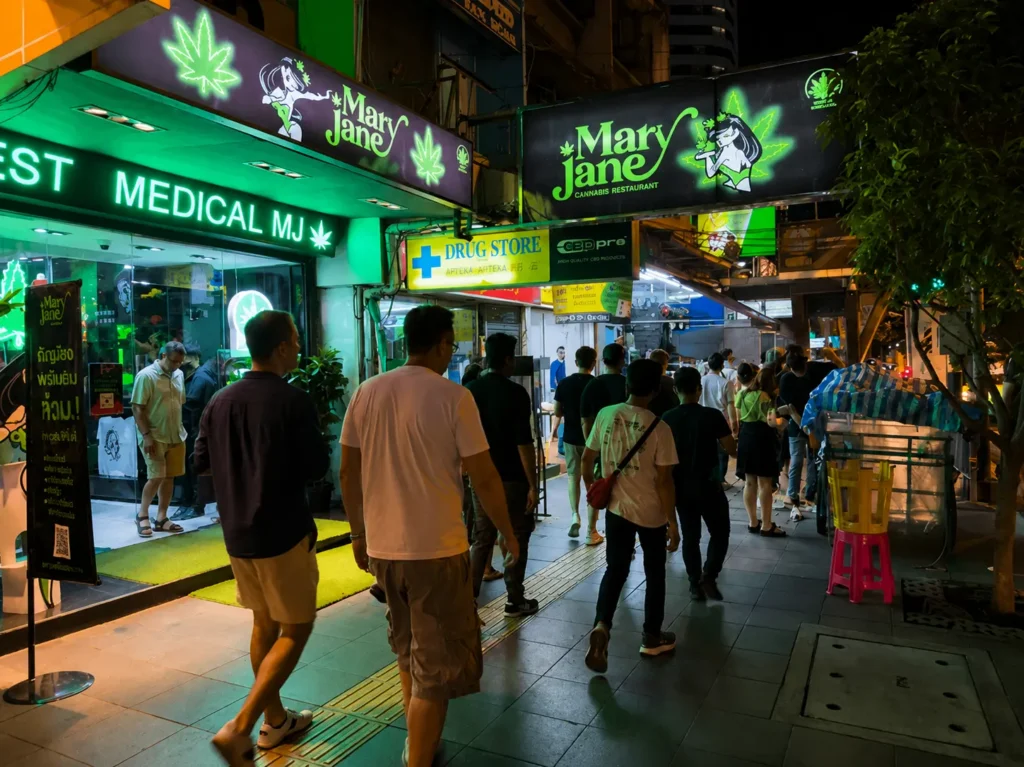
For some expats living in Thailand, drug use starts socially and becomes harder to control over time. Isolation, nightlife exposure, burnout, depression, and easy access to substances can gradually turn occasional use into dependence. Recognising the warning signs early may help foreign residents seek support before the situation becomes medically or psychologically dangerous.
Why Some Foreigners Develop Substance Problems After Moving to Thailand
Relocating to Thailand can be a profoundly positive experience, but for a significant number of foreign nationals, the transition also introduces circumstances that increase vulnerability to substance misuse. This is not unique to Thailand, but certain features of expat life in this country create conditions that addiction specialists recognize as risk factors worth understanding.
Retirement is one of the most commonly discussed transitions in this context. Individuals who have spent decades in structured professional environments sometimes find the absence of routine deeply disorienting. Without the organizing function of work — schedules, responsibilities, social roles, and a sense of purpose — some retirees gradually fill the unstructured hours with alcohol or other substances. What begins as recreational drinking in a warm, affordable setting can become a daily pattern that is difficult to recognize from the inside.
Remote workers living in Thailand face a different but related risk profile. Many spend long periods working alone from apartments or condominiums with limited real-world social connection, irregular sleep schedules, and little separation between work, isolation, and nightlife. Loneliness, time-zone misalignment with colleagues and family, and the absence of in-person work relationships can all contribute to low-grade isolation that individuals sometimes address through substance use rather than community-building.
In nightlife-heavy areas such as Pattaya, parts of Phuket, Bangkok, and some tourist districts in Chiang Mai, heavy drinking and drug use can gradually become part of everyday social life for certain expatriates. Major entertainment districts in several Thai cities operate around an economy that is partly built on uninhibited consumption, and foreign residents who socialize within those spaces may gradually develop tolerance thresholds and usage patterns they would not have encountered in their home countries.
Mental health overlap plays a particularly significant role. Depression, anxiety, unresolved grief, and trauma frequently precede or accompany addiction. Individuals who arrive in Thailand carrying pre-existing psychological distress — sometimes without having sought diagnosis or treatment — may turn to substances as a form of self-medication. The initial relief those substances provide can reinforce patterns of use that later become compulsive.
Easy access to substances is another important factor. Alcohol is inexpensive and widely available, while some expatriates are surprised by how easily sleeping pills, sedatives, and other prescription medications can sometimes be obtained compared to their home countries. These conditions do not cause addiction, but they reduce the practical friction that sometimes slows the progression of problematic use.
Over time, constantly being around heavy drinking or drug use can start to shift what feels “normal,” even for people who never expected their substance use to become a serious problem. When the social environment regularly involves heavy drinking or substance use, the baseline shifts, and behaviors that would attract concern in other contexts begin to appear unremarkable. Foreign residents embedded in nightlife-centered social circles may gradually lose their capacity to assess their own use accurately.
One reason addiction can be difficult to recognise among expats in Thailand is that the progression is often gradual rather than dramatic. Many people continue working, socialising, and functioning outwardly while their substance use steadily becomes more central to daily life. The shift usually becomes obvious only after sleep, relationships, finances, mental health, or physical health have already started deteriorating.

Substances Commonly Associated With Expat Addiction in Thailand
Clinicians working with foreign nationals in Thailand encounter a range of substances, and it is important to note that no reliable population-level statistics are available specifically for expatriate substance use. What follows reflects patterns that addiction specialists and treatment providers in Thailand describe based on clinical experience rather than epidemiological data.
Alcohol remains the most prevalent substance involved in problematic use among foreign residents. Its legal status, low cost, and social acceptability in many expat social environments mean that alcohol-related dependence is frequently present either as a primary concern or alongside other substance use. The relationship between alcohol and other drug use is often bidirectional: heavy drinking can lower inhibitions around trying other substances, and other substance use frequently occurs in alcohol-saturated settings. For a more detailed discussion of this pattern, alcohol addiction within Thailand’s expatriate community has been examined separately.
Stimulants, including cocaine and methamphetamine, are encountered in certain nightlife-centered environments, though their prevalence and the populations involved differ. Cocaine has historically been associated with higher-income nightlife settings in major urban areas. Methamphetamine — particularly in tablet form — is produced in significant quantities in the wider Mekong region, and clinicians may encounter dependence on stimulants among individuals who were initially introduced to them as performance-enhancing or recreational substances.
Prescription sedatives and benzodiazepines represent a distinct and often underrecognized category. Some expatriates obtain these medications through informal channels or through prescriptions issued without comprehensive psychiatric evaluation. Dependence on sedatives can develop over weeks to months with regular use and carries serious withdrawal risks that will be addressed in a later section.
Cannabis, now in a legal gray area in Thailand following recent legislative changes, is increasingly discussed among expatriates. While generally perceived as lower-risk than other substances, some expatriates report escalating use that interferes with mood regulation, motivation, and cognitive function, particularly when use is daily and heavy.
Polydrug use — the concurrent or sequential use of multiple substances — is a pattern that complicates both assessment and treatment. Some individuals present with alcohol and benzodiazepine use simultaneously, while others combine stimulants and sedatives in ways that create significant medical risk. Treatment approaches need to account for the full picture of use rather than addressing substances in isolation.
One reason substance problems among expatriates are often identified late is that many people continue functioning outwardly for a long time. They may still run businesses, work remotely, maintain social lives, and appear stable to people around them while their dependence steadily deepens in private.
Drug Misuse vs Drug Dependence
Understanding the distinction between drug misuse and drug dependence is useful for individuals who are uncertain about whether their own use or that of someone they know represents a clinical concern. These terms are sometimes used interchangeably in everyday conversation, but they describe meaningfully different situations.
Recreational use refers to the intentional, usually occasional use of a substance for pleasure or social purposes, without significant negative consequences or compulsion. Hazardous use describes patterns where the risk of harm is elevated — using substances in quantities or frequencies that increase the probability of physical, psychological, or social damage — even when dependence has not yet developed.
Drug dependence, by contrast, is characterized by physiological and psychological adaptations to the presence of a substance. Tolerance — the need for increasing amounts to achieve the same effect — is an early marker. Withdrawal symptoms that occur when use is reduced or stopped indicate physiological dependence. Compulsive use despite clear negative consequences, unsuccessful attempts to cut back, and the organization of daily life around obtaining and using a substance are psychological features of dependence.
The distinction matters in practical terms because the treatment requirements differ significantly. Hazardous use without dependence may respond to brief counseling interventions or behavioral changes in social environment. Established dependence, particularly involving alcohol, benzodiazepines, or opioids, typically requires medically supervised detoxification before other therapeutic approaches can be meaningfully engaged. Attempting to address underlying psychological issues while an individual remains in active physiological dependence is rarely effective without stabilization first.
Many expatriates do not initially see themselves as having an addiction problem because the pattern often develops slowly inside otherwise normal daily routines. Drinking every evening, relying on stimulants to stay productive, or using sedatives to sleep can gradually become habitual long before the person recognises how dependent they have become on those substances to function or cope emotionally.

Warning Signs That Substance Use May Be Becoming Dangerous
Recognizing the point at which substance use has crossed into dangerous territory is complicated by the gradual nature of the process and by the cognitive distortions that often accompany increasing dependence. The following patterns, individually or in combination, are recognized by addiction specialists as warranting professional evaluation.
Increasing tolerance is one of the clearest early signals. When an individual finds that the quantities they previously used no longer produce the desired effect and they consistently consume more to compensate, physiological adaptation is occurring. This can feel like simply having “built up a resistance” rather than a medical development, which is why it is frequently minimized.
Withdrawal symptoms — including sweating, tremors, anxiety, nausea, insomnia, or agitation when use is reduced or stopped — indicate that the body has become physiologically dependent. Some individuals continue using primarily to avoid these symptoms rather than to seek positive effects, which represents a significant shift in the function that substances are serving.
Daytime use, or use that begins earlier in the day than previously, often reflects an increasing urgency around maintaining substance levels. Sleep disruption is both a consequence and a driver of escalating use: poor sleep increases anxiety and discomfort, which reinforces substance use as a coping mechanism.
Psychological symptoms including paranoia, unprovoked anxiety, panic attacks, and mood instability may be caused or significantly worsened by stimulant use or by withdrawal from sedatives. These symptoms are sometimes misidentified as standalone psychiatric conditions rather than substance-related effects, which delays appropriate treatment.
Failed attempts to stop or reduce use — situations where an individual genuinely intends to cut back and finds themselves unable to sustain that reduction — are a defining characteristic of compulsive use patterns. Secrecy around substance use, the concealment of quantities consumed, and reluctance to discuss the topic with family members or close contacts often accompany this stage.
Relationship deterioration, financial instability, and neglect of professional or personal responsibilities reflect the displacement effect of addiction: as substance use consumes increasing time, energy, and cognitive resources, other areas of life progressively suffer. Mixing substances — combining alcohol with sedatives, for example, or using multiple stimulants — significantly elevates medical risk and often signals a loss of control over use patterns.
Some expatriates attempt to stop using substances suddenly on their own after a period of heavy use, particularly after a health scare, relationship conflict, or panic about losing control. This can be medically risky depending on the substance involved. Alcohol and benzodiazepine withdrawal, in particular, can become dangerous without medical supervision.
Can Drug Withdrawal Become Dangerous?
Withdrawal from certain substances carries genuine medical risk, and this is particularly important for expatriates in Thailand who may be considering stopping substance use without professional guidance. The severity of withdrawal depends on the substance involved, the duration and quantity of use, the individual’s overall health, and whether multiple substances are involved.
Stimulant withdrawal — following cessation of cocaine or methamphetamine use — does not typically produce the severe physiological instability associated with other substance withdrawals, but it commonly involves extreme fatigue, prolonged sleep, profound low mood, and in some cases suicidal ideation. The psychiatric dimension of stimulant withdrawal requires monitoring and, in some cases, professional support.
Benzodiazepine withdrawal is among the most medically serious of any substance, alongside alcohol. Abrupt cessation after prolonged use can produce anxiety, tremors, hypersensitivity to sensory stimulation, and seizures. The seizure risk makes unsupervised benzodiazepine withdrawal genuinely life-threatening, and individuals who have been using sedatives regularly and at significant doses should not attempt to stop without medical involvement.
Alcohol withdrawal follows a similar pattern. Mild withdrawal may involve sweating, nausea, and insomnia, but severe alcohol withdrawal syndrome can include delirium, hallucinations, and seizures. These manifestations typically emerge within 24 to 72 hours of the last drink in individuals with significant physical dependence. Emergency department presentation is appropriate when these symptoms appear.
Opioid withdrawal, while rarely immediately life-threatening in physically healthy individuals, produces significant physical and psychological distress — including severe muscle and bone pain, gastrointestinal symptoms, anxiety, and insomnia — that frequently drives relapse before detoxification is complete. Medically supervised withdrawal with appropriate pharmacological support substantially increases the likelihood of completing detoxification.
Any withdrawal process involving seizures, loss of consciousness, confusion, or severe psychiatric instability requires emergency medical care. In Thailand, emergency departments at major private hospitals with international patient services can provide initial stabilization and inpatient monitoring. Psychiatric observation may be required in cases involving significant psychological decompensation during withdrawal.
For many foreigners in Thailand, the point where substance use becomes unmanageable is often followed by confusion about what to do next. Some are unsure whether they need detoxification, psychiatric support, outpatient care, or a longer period away from the environment where the problem developed. Understanding the difference between these pathways can make seeking help feel far more manageable.
How Addiction Treatment Pathways Work in Thailand
For foreign nationals seeking addiction treatment in Thailand, understanding how the healthcare system functions — and where English-language services are available — reduces barriers to accessing appropriate care. The pathways available range from hospital-based assessment through to longer-term residential support, and the appropriate starting point depends on the clinical situation.
Initial assessment is typically conducted by a physician or psychiatrist, either in an outpatient clinic or, when withdrawal risk is elevated, in an inpatient hospital setting. Assessment covers substance use history, current physical health, mental health status, and withdrawal risk. This evaluation determines whether medically supervised detoxification is required before other treatment approaches are engaged.
Detoxification is a medical process, not a treatment for addiction itself. Its purpose is to safely manage withdrawal and stabilize the individual physically. In Thailand, detoxification services are available in both public and private hospital settings. Private hospitals with international patient departments generally offer more accessible English-language communication and shorter waiting times than the public system, though at significantly higher cost.
Psychiatric evaluation is an important component of comprehensive assessment. The relationship between addiction and mental health conditions — depression, anxiety disorders, post-traumatic stress, and others — means that treating substance use without addressing underlying psychological factors significantly limits long-term outcomes. Some facilities in Thailand offer integrated addiction and psychiatric services; others may require coordination between different providers. For an overview of addiction treatment pathways in Thailand and the substances commonly involved, additional background information is available.
Following medical stabilization, outpatient care involves regular appointments with a psychiatrist or counselor, participation in structured therapeutic programs, and engagement with peer support networks. This model suits individuals with strong social support, stable living circumstances, and lower relapse risk. For those without these protective factors — or those returning to environments with high relapse triggers — residential recovery support may be clinically appropriate.
Language access is a practical issue that significantly affects treatment quality. Public hospital psychiatric departments often operate primarily in Thai, and interpreter availability varies. Major private hospitals in Bangkok, Chiang Mai, and other urban centers maintain international patient departments with English-speaking staff, though specialized addiction services may not always be available within those settings. Expatriates should inquire specifically about addiction-trained English-speaking staff rather than general international patient services.
Insurance considerations are complex. International health insurance policies vary considerably in how they categorize and reimburse addiction treatment. Detoxification is sometimes covered as a medical service even when residential rehabilitation is not. Individuals should review their policy documentation and contact their insurer directly before committing to a treatment pathway, as assumptions about coverage are frequently incorrect.
Important: Short-term detoxification may stabilize immediate withdrawal symptoms, but some individuals later require longer-term psychological support, relapse prevention planning, or a more stable recovery environment if repeated relapse or severe isolation remain ongoing concerns.
One of the most difficult parts of recovery for some expatriates in Thailand is returning to the same environment where substance use became normal. The same nightlife districts, social circles, apartments, bars, and daily routines that were closely tied to drug or alcohol use can quickly reactivate cravings and old behavioural patterns, especially during early recovery.
How Recovery Environment Can Affect Relapse Risk
Environmental factors play a documented role in relapse vulnerability following addiction treatment. Recovery is not solely an internal psychological process; the social and physical environment in which an individual attempts to sustain sobriety significantly influences their likelihood of success.
For expatriates in Thailand, this dimension is particularly relevant. Major entertainment districts and nightlife-centered environments in Thailand’s urban centers provide persistent exposure to social settings where substance use is normalized, where former associates who continue to use substances are encountered, and where contextual cues — sights, sounds, and social dynamics associated with previous use — function as behavioral triggers. Research in addiction medicine consistently finds that cue exposure in early recovery elevates relapse risk, and environments saturated with those cues make sustained recovery considerably more difficult to maintain.
Social environment is equally significant. Recovery is substantially supported by access to peers in recovery, structured therapeutic engagement, and daily routines that are not organized around nightlife. Isolation, by contrast, increases psychological distress and reduces the social accountability that supports behavioral change.
For individuals who find that returning to their existing residential environment in a major entertainment district or urban nightlife setting consistently precedes relapse, clinicians may recommend a period of recovery in a different physical environment. Quieter regions of Thailand — including areas in the north of the country, such as the surroundings of Chiang Rai — offer significantly reduced environmental triggers, slower-paced daily life, and natural surroundings that some individuals find conducive to recovery stability. Some English-speaking residential addiction treatment programs in northern Thailand, including Siam Rehab, operate in quieter environments removed from major nightlife districts.
The goal of environmental consideration in recovery planning is not permanent relocation but rather the creation of conditions in which the psychological work of recovery can proceed without constant exposure to relapse triggers during the most vulnerable early period.
Many expatriates delay seeking help simply because they are unsure where to start. Concerns about language barriers, uncertainty about Thailand’s healthcare system, fear of stigma, or confusion about detox and rehabilitation options often keep people isolated long after the problem has started affecting their health, relationships, or daily functioning.
English-Speaking Addiction Support Resources in Thailand
Access to English-language support is a practical concern for many foreign nationals seeking addiction-related help in Thailand. The following organizations and services represent real options, though individuals should confirm current service availability, operating hours, and English-language capacity directly, as these details change over time.
The Thai Department of Mental Health (dmh.go.th) is the primary government body responsible for mental health and addiction services in Thailand. The department oversees the national network of psychiatric hospitals and substance abuse treatment facilities. While services are primarily provided in Thai, the department’s website offers some English-language information, and government-run facilities in major cities may have staff with English capability, though this varies significantly by location.
The national mental health crisis line, operated under Thailand’s Universal Coverage Scheme, provides telephone-based mental health support. Information about this service, including contact details, is available through the National Health Security Office’s English-language portal. Individuals should verify current availability and whether English-language operators are accessible at the time of contact.
Bangkok Hospital (bangkokhospital.com) is one of Thailand’s largest private hospital networks, with facilities in Bangkok and several other cities. International patient departments offer English-speaking clinical staff, and the group’s mental health services include psychiatric evaluation relevant to addiction. Bangkok Hospital is not a specialized addiction treatment center, but it represents a viable first point of contact for medical assessment, withdrawal management, and psychiatric referral for English-speaking patients.
Suan Prung Psychiatric Hospital (suanprung.go.th), located in Chiang Mai, is a major government psychiatric facility in northern Thailand with a long history of addiction-related services. As a public institution, it operates primarily in Thai, but it serves as the regional center for psychiatric and addiction care in northern Thailand and can provide services at significantly lower cost than private facilities. Individuals without insurance or with limited financial resources may find public hospital services, including Suan Prung, a more accessible pathway than private options.
Alcoholics Anonymous Thailand (aathailand.org) maintains a network of English-language meetings across Thailand, with active groups in Bangkok, Chiang Mai, Phuket, and other areas with significant expatriate populations. AA meetings are peer-support groups rather than clinical services, but they provide consistent community connection, structured accountability, and access to individuals with sustained recovery experience. For expatriates in early recovery or those seeking ongoing peer support without clinical intervention, English-language AA meetings represent an accessible, no-cost resource. The AA Thailand website lists current meeting schedules and locations.
Beyond these specific resources, expatriates seeking addiction-related support have several navigational options worth considering. Larger private hospitals throughout Thailand maintain international patient departments designed to serve foreign nationals. Requesting a psychiatric or addiction medicine consultation through these departments can connect individuals with English-speaking clinical staff and appropriate specialist referrals. Some international health insurance providers offer medical assistance lines staffed by case managers who can help identify in-network providers with relevant expertise in a given location.
For structured residential treatment approaches in Thailand, English-language programs exist in both urban and more rural settings, each with different program structures, clinical emphases, and suitability depending on individual circumstances. Individuals evaluating options should ask specifically about addiction medicine credentials, the availability of psychiatric care within the program, and whether the program’s approach has been informed by established evidence-based models.
It is worth noting that interpreter services in Thailand’s healthcare system are inconsistent. Even facilities that describe themselves as internationally oriented may not consistently provide interpreters for psychiatric or addiction consultations. Patients who anticipate language barriers are advised to bring a bilingual contact if possible, to prepare written summaries of their medical history in English, and to request written documentation of assessments and treatment recommendations for review and follow-up.
When professional help may be urgently needed: repeated failed attempts to stop, withdrawal symptoms, mixing substances, suicidal thoughts, panic attacks, severe sleep disruption, or substance use that is already damaging work, finances, or relationships.
Whether the appropriate next step is a call to a peer support group, an appointment with a private hospital psychiatrist, or an inquiry about residential treatment, the most important practical step is making contact with a real service rather than attempting to manage a serious substance-related situation in isolation. Professional support for addiction is available in Thailand in English, and identifying the right entry point is considerably more manageable with clear information about what those options actually involve.


'/%3E%3Cpath%20fill='%23b2b2b2'%20d='M241%20382q0%2016%2017%2026%2017%2011%2042%2011t42-11q16-11%2017-26V269H241'/%3E%3Cpath%20fill='%239f7e00'%20d='M241%20379q0%2014%208%2023%209%209%2021%209%2014%200%2021-9%209-9%209-23V269h-59'/%3E%3Cpath%20d='M241%20339v-70h59v110q0%2014-9%2023l-6%205v-68h-15v72q-8%200-14-4v-68zm59%2040c0%2022%2015%2032%2029%2032%2021%200%2030-18%2030-32v-40h-59'/%3E%3Cpath%20fill='%239f7e00'%20d='M266%20277v5h2v12h-3v-5h2v-5h-9v5h2v5h-4v9h3v18h-5v10h34v-10h-5v-18h3v-9h-4v-5h2v-5h-9v5h2v5h-3v-12h2v-5zm42%20101q0%2010%206%2017%206%206%2015%207%2010-1%2016-7%206-7%206-17v-29h-43'/%3E%3Ccircle%20fill='%230044ad'%20cx='329.5'%20cy='372'%20r='6'/%3E%3Cellipse%20fill='%230044ad'%20cx='300'%20cy='340'%20rx='16'%20ry='21'/%3E%3C/svg%3E)