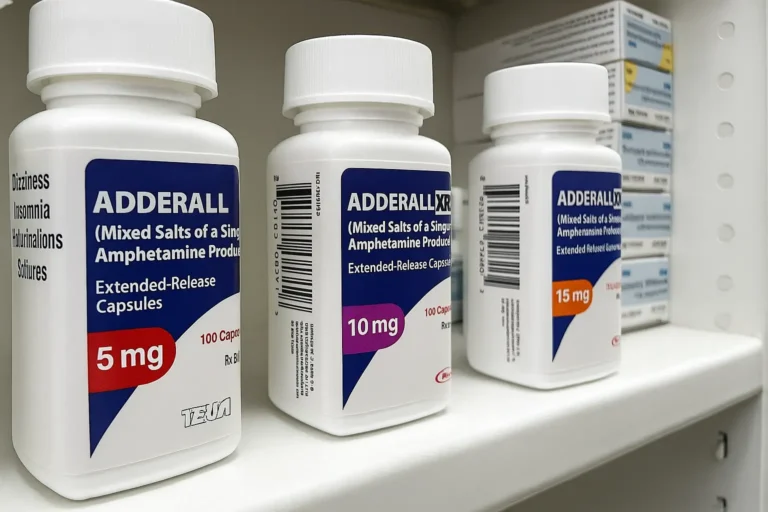
Adderall rehab in Thailand means choosing between at least half a dozen residential centers in Chiang Mai, Chiang Rai, and Phuket, each handling stimulant misuse differently. Some built their program around opiate or meth withdrawal and treat Adderall as an add-on topic; others run psychiatric care specifically suited to stimulant dependence. The right fit depends on how far the use has progressed and whether the original prescription involved a real ADHD diagnosis.
What Does Adderall Rehab in Thailand Actually Involve?
Adderall rehab in Thailand combines medically supervised stimulant withdrawal, individual and group therapy, and a structured residential routine, typically running four to twelve weeks depending on relapse history. Programs range from small clinical centers with in-house psychiatric oversight to larger facilities where Adderall is one of several substances handled under a generic detox protocol rather than a stimulant-specific one.
Who This Actually Applies To
Not everyone tapering off Adderall needs residential treatment. Someone with a legitimate ADHD prescription who has not increased their own dose, sourced pills outside that prescription, or tried and failed to stop before can often work with a psychiatrist on a supervised taper without leaving home. Residential care becomes the more realistic option once self-regulation has already broken down, since outpatient tapering depends on exactly the kind of control the addiction has undermined.
A pattern worth naming directly: people who started on Adderall for a real ADHD diagnosis and people who started buying it from classmates or coworkers to work longer hours often end up on the same generic “stimulant addiction” page, even though the clinical starting point, the psychiatric history required at intake, and the post-discharge medication plan are different for each group. A program that does not ask which one applies to a new client at assessment is applying a one-size answer to two different situations.
Comparing Adderall Rehab Options in Thailand
Most Thailand-based centers did not design their program around Adderall specifically. When the marketing page for “Adderall rehab” is read closely, it is usually a page built for methamphetamine or opiate withdrawal with the word Adderall inserted, and the actual protocol underneath does not change. Comparing options is mostly a matter of identifying which category a given center actually falls into.
Comparison of program types available for stimulant misuse in Thailand:
When someone was researching options after a failed attempt to quit Adderall on their own, one common outcome was choosing a large multi-substance facility based on reviews and photos, only to find during intake that the counselor assigned had limited experience separating stimulant misuse from an underlying ADHD diagnosis that had gone unaddressed for years. The mismatch did not surface until well after admission, when the treatment plan had to be revised mid-program.
A pattern that rarely gets discussed openly: stimulant withdrawal does not force the kind of medical crisis that pushes a family to act quickly, the way an opiate overdose or a seizure during alcohol withdrawal does. There is no single dramatic event that makes the decision urgent, which is exactly why Adderall misuse tends to run for years before anyone seeks residential care at all. By the time someone is comparing programs, the underlying tolerance and dependence are usually more entrenched than the person doing the comparing assumes, since nothing forced an earlier stop.
To see how a specific small clinical program compares against a larger Chiang Mai-based facility on cost, structure, and clinical access, Siam Rehab’s detailed comparison with a Chiang Mai residential center and its comparison with a Koh Chang-based program break down the differences criteria by criteria.
To confirm which category a specific center actually falls into before booking travel, contact the admissions team directly and ask whether the intake psychiatrist has handled Adderall or stimulant cases specifically, not addiction cases in general.
Adderall’s Legal Status in Thailand Changes the Post-Discharge Plan
Amphetamine and dextroamphetamine, the active ingredients in Adderall, are classified as Category 1 narcotics under Thai law, with no recognized medical use and no import permit pathway available even with a valid foreign prescription. This is a different situation from many other controlled medications: Category 2 substances like codeine or methylphenidate can be brought in with a Thai FDA permit obtained in advance, but Category 1 has no equivalent route.
The practical effect rarely gets discussed openly on rehab marketing pages: removal from access to Adderall during treatment in Thailand is not just a therapeutic design choice, it is a legal fact of the country the client is in. For someone whose Adderall use began as a genuine ADHD prescription, this means the treatment plan has to include a conversation with the admitting psychiatrist about what happens after discharge, since resuming the same medication at home is a separate decision from what happens during the stay. General rules for traveling with other categories of medication into Thailand are covered in Siam Rehab’s guide to bringing medication into Thailand; this section addresses the narrower, rehab-specific question of what a Category 1 classification means for someone in treatment.
Psychiatrists working with international clients in Thailand typically discuss transitioning a genuine ADHD diagnosis toward non-stimulant options, such as atomoxetine, or toward methylphenidate-based medications, which fall under a different, less restrictive category and can sometimes be brought in in limited quantities with prior documentation. None of this is guaranteed case by case, and it depends on assessment by a licensed psychiatrist rather than a general rule that applies to everyone equally.
Leaving this conversation until arrival, rather than raising it during the pre-travel assessment, tends to compress a decision that deserves more time into the first stressful days of admission, when the person is also managing withdrawal itself. Raising it earlier gives the psychiatric team room to plan a realistic discharge medication strategy instead of improvising one under pressure.
If Adderall use began under a legitimate ADHD prescription and no dose escalation or unauthorized sourcing has occurred, a psychiatric consultation before travel is usually the first step, not full residential admission. If the pattern includes self-escalated dosing, buying pills outside a prescription, or a previous failed attempt to quit, discussing a residential stay with the admissions team is the more realistic next step.
What a Thailand-Based Program Should Cover for Adderall Specifically
At Siam Rehab, a private residential facility in Chiang Rai licensed by Thailand’s Ministry of Public Health, admission for stimulant-related cases begins with a psychiatric evaluation from the facility’s external psychiatrist and medical advisor within the first days of arrival, followed by an individualized detox and therapy plan built around Cognitive Behavioral Therapy and structured daily routine. Capacity is kept at a maximum of 18 clients, which keeps the counselor-to-client ratio close enough for the ADHD-versus-misuse distinction to actually be assessed rather than assumed at intake.
Clinical guidelines generally treat stimulant withdrawal as psychologically demanding rather than medically dangerous in the way alcohol or benzodiazepine withdrawal can be, which is why the emphasis in a well-run program sits on therapy and routine rather than intensive medical detox alone. Medications used to ease the crash phase, and any separate health conditions such as depression or hypertension identified during assessment, are billed separately from the program fee, and any inpatient hospital or clinic care required during the stay is billed directly by that medical facility rather than by the rehab program itself.
To confirm program length and cost structure for a specific situation, Siam Rehab’s private rehab cost breakdown covers exact figures by program length; the short version is that residential blocks are typically priced in four, eight, or twelve-week increments determined by relapse history rather than fixed at intake.
How Admission Actually Works
Admission for Adderall-related treatment follows the same sequence as other substance cases, with one addition: current dosage and any ADHD diagnosis history need to be disclosed before the clinical assessment, not after arrival.
- Step 1: Complete the admission form. State current daily Adderall dose, how it is being sourced, and whether an ADHD diagnosis was ever made by a physician.
- Step 2: Complete the clinical assessment. This happens remotely before travel is booked and determines whether residential care or a supervised outpatient taper fits the situation better.
- Step 3: Pay the required deposit and confirm travel dates. Deposits are non-refundable and full payment is generally required before arrival unless otherwise agreed in writing.
- Step 4: Undergo psychiatric evaluation on arrival. Detox and therapy planning begins within the first days on-site, with the ADHD-versus-misuse question addressed directly at this stage.
Siam Rehab’s psychiatric screening process guide and admission form cover the documentation needed before this sequence begins.
Before Choosing: What People Usually Ask
Three concerns come up repeatedly when someone is comparing Adderall rehab options in Thailand rather than treatment closer to home.
The first is whether traveling this far actually matters if the withdrawal itself is mostly psychological rather than physically dangerous. It matters less for medical risk and more for access: staying within reach of a prescription, a friend willing to share pills, or a familiar pharmacy makes a supervised taper far harder to hold to than removing that access entirely, which is what distance provides regardless of which specific withdrawal symptoms show up.
The second is whether a program built mainly around opiate or meth cases can actually help with Adderall. It can, but only if the intake psychiatrist has specifically screened for the ADHD-versus-misuse distinction described earlier; without that step, the treatment plan risks being generic rather than matched to the actual clinical picture.
The third is what happens to legitimate ADHD management once the program ends. This depends on what the admitting psychiatrist recommends during the stay, since the Category 1 status covered above rules out resuming the same prescription while in Thailand and requires a separate plan for care after discharge.
Someone in a demanding professional environment considering residential treatment abroad often delays the decision by weeks while weighing whether a discreet program away from home is worth the disruption to work, compared with a domestic outpatient option that keeps them visible to colleagues. The decision usually comes down to whether previous attempts to manage the use while still working have already failed.
Delaying the decision has a cost beyond lost time. Each additional month of unmanaged Adderall misuse tends to raise the effective dose needed to feel normal, which lengthens the eventual withdrawal and makes the psychological crash after stopping more severe, since tolerance keeps building in the background regardless of whether treatment has started. Choosing the wrong type of program carries a separate cost: a client who enters a generalist facility without stimulant-specific psychiatric screening may complete detox without the underlying ADHD-versus-misuse question ever being answered, which raises the likelihood of relapse once the same untreated pressures reappear at home.
A separate, more complicated situation involved someone who had been prescribed Adderall for years for diagnosed ADHD, then began taking extra doses during a period of high work pressure without telling their prescriber. By the time they considered residential treatment, they were uncertain whether they needed help for addiction, for undertreated ADHD, or both, and the uncertainty itself delayed the decision for several additional months.
Siam Rehab’s admissions team can review current medication, dosage history, and travel timing directly before a decision is made, without requiring commitment to a program first.
Frequently Asked Questions
How much does drug rehab cost in Thailand?
Cost depends on program length and facility type, with private residential programs generally priced by the week or by four, eight, or twelve-week blocks rather than a single flat rate. Figures vary considerably between small clinical centers and larger resort-style facilities, and medication or hospital costs are typically billed separately, so requesting a specific quote after clinical assessment is more reliable than relying on a general published estimate.
Do people go to rehab specifically for Adderall addiction?
Yes, though the volume of cases is smaller than for opiates or methamphetamine, and many Thailand-based centers handle Adderall under a general stimulant or prescription drug category rather than a dedicated protocol built for it. Residential care tends to be most appropriate once self-directed tapering has already failed, dosing has escalated well beyond what was originally prescribed, or pills are being sourced outside a legitimate prescription entirely.
What ADHD medications are available in Thailand after treatment?
Amphetamine-based medications including Adderall cannot be legally obtained or imported in Thailand under any circumstances, since they fall under Category 1 narcotics with no recognized medical use in the country. Psychiatrists working with international clients typically discuss non-stimulant alternatives such as atomoxetine, or Category 2 options like methylphenidate, as part of discharge planning, with the specific choice depending on individual assessment.
Is Thailand a good option specifically for Adderall rehab, or mainly for opiates and alcohol?
Thailand’s rehab sector developed primarily around opiate, alcohol, and methamphetamine cases over the past two decades, so Adderall-specific clinical expertise varies more between centers than it does for those more established substance categories. Asking directly about the intake psychiatrist’s experience distinguishing stimulant misuse from underlying ADHD is a more reliable way to assess fit than assuming general addiction experience automatically transfers.
Can I bring my current Adderall prescription while I decide on treatment?
No import route exists for Adderall into Thailand regardless of how valid or well-documented the foreign prescription is, since amphetamine salts are classified as Category 1 narcotics with no permitted personal-use exemption. This is worth confirming directly with a psychiatrist well before travel, since it affects both what can legally be carried on the trip and how the treatment plan is structured once admission begins.
Not Sure Which Level of Care Fits Your Situation?
Siam Rehab’s admissions team can review current Adderall use and history and advise whether residential treatment is the appropriate next step.