What Country Is Best for Rehabilitation?
People in the US, UK, Europe, and Australia increasingly look outside their home countries for addiction treatment and ask a practical question: what country is best for rehabilitation? Thailand is often considered one of the strongest options for addiction treatment abroad when cost, access, and clinical intensity are compared directly. What matters most is whether a specific program can provide safe, evidence-informed care that matches a person’s clinical needs, budget, and recovery supports. For many, Thailand rehabilitation becomes part of that comparison because it can combine structured treatment with relative affordability and distance from familiar triggers. For a more detailed framework on how facilities are assessed, including clinical quality indicators and operational standards, see how to evaluate drug rehab in Thailand. A broader overview of program types and decision factors is also available in the main guide to rehab options in Thailand.
After comparing countries and treatment environments, the next step is understanding how admission is handled in practice, including screening and travel coordination. See how to get into rehab before proceeding.
The Global Landscape of Addiction Treatment: Why Look Abroad?
Traveling for healthcare, sometimes referred to as medical tourism, increasingly includes addiction treatment. People may consider rehab abroad for practical reasons rather than aspirational ones:
- Cost: Inpatient treatment in some Western countries can be expensive, particularly for longer stays or private programs. Some international programs in destinations such as Thailand may offer comparable core services at a lower overall cost.
- Privacy and confidentiality: Treatment away from home can reduce concerns about stigma in professional or social environments.
- Change of environment: Physical distance from routines and high-risk settings can help some individuals focus more fully on treatment engagement.
- Access to specific modalities: Some international programs combine evidence-based psychotherapy with structured wellness practices such as mindfulness, yoga, and exercise.
- Availability and reduced wait times: In certain healthcare systems, access to specialized treatment may involve long waiting periods, while private international programs may admit more quickly.
Countries such as Costa Rica, South Africa, and parts of Europe also provide international rehab options. In practice, the more relevant question is not which country is best in general, but whether a specific program offers qualified clinical staffing, safe operations, transparent practices, and realistic continuity of care after discharge.
If you are considering Southeast Asia more broadly, the Thailand vs Bali rehab comparison outlines differences that commonly affect international clients, including program structure, safety considerations, and overall cost frameworks.
Programs such as Siam Rehab are typically considered when local treatment is unavailable, too expensive, or fails to provide sufficient separation from triggers.
What Makes Thailand a Strong Contender for Best Rehabilitation Destination?
Thailand is frequently shortlisted by international clients because several practical factors can align in a way that is less common elsewhere. These advantages, however, depend heavily on the standards and clinical integrity of the individual facility.
- Cost-effectiveness: Compared with some Western private programs, treatment in Thailand may be more affordable, which can make longer stays more accessible for certain individuals.
- Program structure and clinical approach: Some centers serving international clients report using evidence-based approaches such as CBT, DBT, motivational interviewing, group therapy, and relapse prevention planning. How consistently these approaches are implemented matters more than the labels themselves.
- Therapeutic setting: Many facilities are located in quieter environments that may support routine stabilization and reduced external distraction.
- Established travel infrastructure: Thailand’s travel infrastructure can simplify logistics for international clients, particularly English-speaking travelers.
- Distance from triggers: Physical separation from high-risk environments may reduce immediate access to substances and allow time to practice new coping strategies.
Clinical teams working with international clients often observe that the combination of distance, structure, and affordability can be particularly relevant for individuals with repeated relapse patterns or complex psychosocial stressors. The determining factor remains whether a specific program matches clinical needs and provides credible follow-up planning.

- If treatment access is delayed locally → consider overseas options
- If cost limits treatment duration → compare Thailand
- If relapse continues in the same environment → separation becomes necessary
Evaluating Rehab Quality in Thailand: What to Look For
Thailand includes a wide range of facilities, from clinically structured programs to centers with limited transparency around staffing or safety. Careful evaluation is essential. Key indicators commonly include:
- Licensing and operating standards: Clarify what local licensing applies and how standards are implemented in practice.
- Evidence-based therapies: Programs should be able to explain what therapies are used, how frequently, and by which professionals.
- Staff qualifications: Confirm credentials, supervision structure, and clinical leadership.
- Individualized treatment planning: Look for structured assessments and personalized care plans.
- Client-to-staff ratio: Lower ratios may support more individualized monitoring and care.
- Aftercare planning: Sustainable recovery depends on continuity of support after discharge.
Ask for concrete details regarding daily schedules, medical protocols, and escalation procedures if a client becomes unstable.
For program-specific questions, you can contact Siam Rehab through published channels, including info@siamrehab.com.
Navigating the Journey: Practical Considerations for Thailand Rehabilitation
International treatment involves logistical planning that can affect continuity of care, particularly when medication management or mental health stability is involved.
- Visas and travel: Entry rules vary by nationality and may change.
- Language: Clinical communication should be conducted in fluent English for international clients.
- Safety and local context: Ask about supervision, emergency protocols, and hospital access.
- Communication with home: Clarify policies regarding phone and internet access.
- Packing and medications: Confirm medication documentation and storage policies.
Once a destination is chosen, understanding how admission works becomes critical for avoiding delays.
Practical Tip 1: Request clear operational details rather than relying on marketing summaries.
Practical Tip 2: Distance can reduce exposure to triggers but does not remove the work of recovery.
Case Study: Mark’s Journey to Recovery in Thailand
Mark, a 45-year-old marketing executive from the UK, had struggled with alcohol and cocaine use for over a decade. After repeated outpatient attempts, his family explored international options due to cost and environmental factors. Thailand offered structured care and separation from daily triggers.
During treatment, Mark engaged in psychotherapy, group work, and routine stabilization. He returned home with a defined aftercare plan and follow-up supports.
Addressing Common Concerns About Rehab in Thailand
- Safety: Depends on the facility’s clinical governance and emergency protocols.
- Cost comparison: Request itemized pricing and include travel-related expenses.
- Aftercare: Clarify referral pathways and post-discharge coordination.
- Cultural fit: Focus on clinical communication and treatment adaptability.
Practical Tip 3: Begin aftercare planning early.
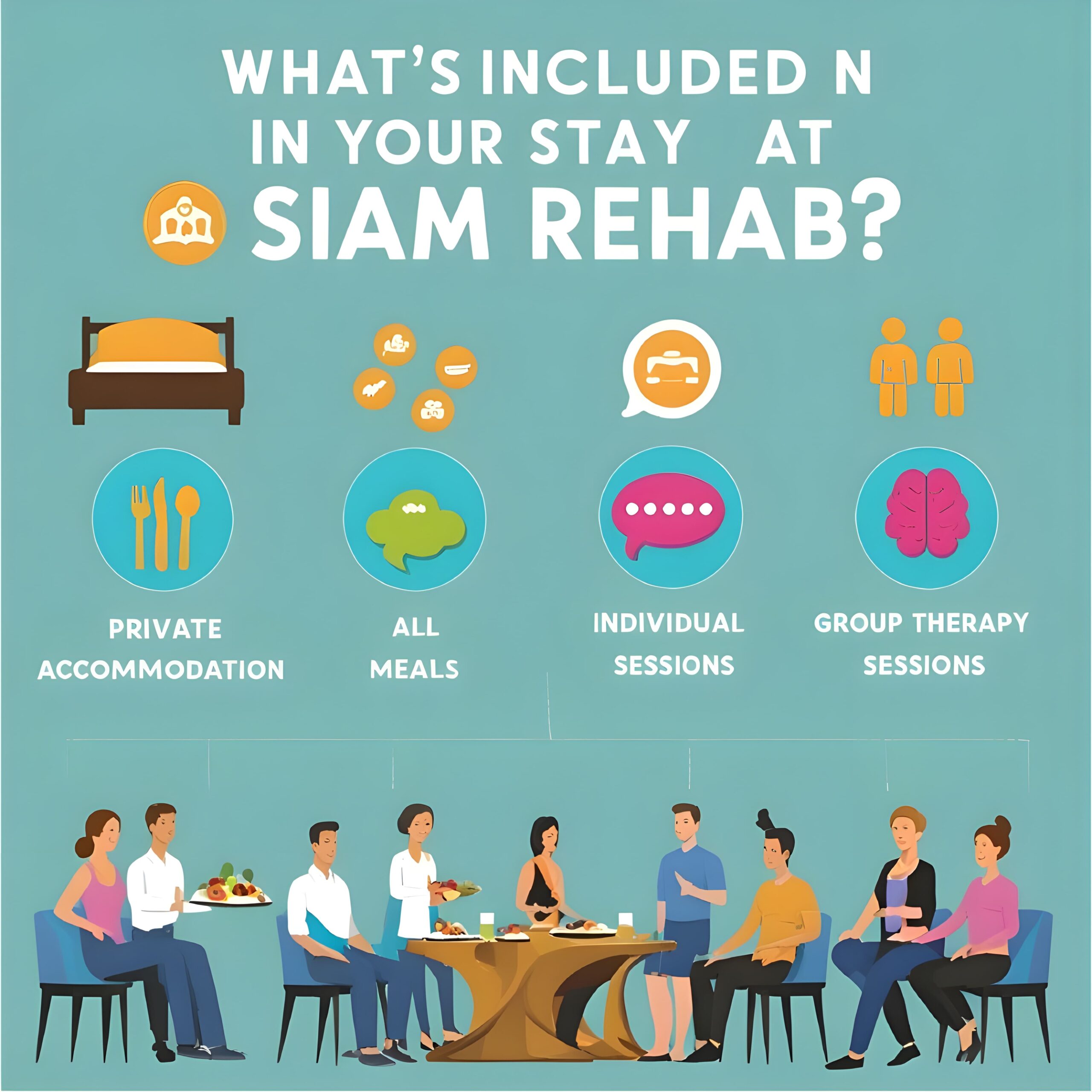
Key Takeaways: Thailand Rehabilitation
- There is no universally best country for rehabilitation.
- Thailand is often considered for affordability and structured care.
- Program quality varies and requires verification.
- Evidence-based treatment and aftercare planning are critical.
Frequently Asked Questions (FAQ)
Does Canada pay for rehab?
Coverage varies by province and treatment type. International care is typically self-funded.
Which country has the best rehabilitation system?
No single country is universally best. Program quality and fit matter more than location.
What is the success rate of rehabilitation in Thailand?
Outcome reporting varies widely and should be interpreted cautiously.
How much does rehabilitation cost in Thailand compared to the USA?
Pricing varies by facility and length of stay. Itemized comparisons are recommended.
Are rehabs in Thailand good?
Quality varies. Screening for clinical governance is essential.
Conclusion: Making an Informed Choice for Your Recovery Journey
Choosing where to seek treatment is a high-impact decision. International options may expand access when local care is limited or unaffordable.
Reviewing trauma-related resources such as patterns seen in post-traumatic stress and understanding long-term risks described in long-term effects of drug misuse may support informed planning.
For confidential inquiries, contact Siam Rehab through published channels, including info@siamrehab.com.




'/%3E%3Cpath%20fill='%23b2b2b2'%20d='M241%20382q0%2016%2017%2026%2017%2011%2042%2011t42-11q16-11%2017-26V269H241'/%3E%3Cpath%20fill='%239f7e00'%20d='M241%20379q0%2014%208%2023%209%209%2021%209%2014%200%2021-9%209-9%209-23V269h-59'/%3E%3Cpath%20d='M241%20339v-70h59v110q0%2014-9%2023l-6%205v-68h-15v72q-8%200-14-4v-68zm59%2040c0%2022%2015%2032%2029%2032%2021%200%2030-18%2030-32v-40h-59'/%3E%3Cpath%20fill='%239f7e00'%20d='M266%20277v5h2v12h-3v-5h2v-5h-9v5h2v5h-4v9h3v18h-5v10h34v-10h-5v-18h3v-9h-4v-5h2v-5h-9v5h2v5h-3v-12h2v-5zm42%20101q0%2010%206%2017%206%206%2015%207%2010-1%2016-7%206-7%206-17v-29h-43'/%3E%3Ccircle%20fill='%230044ad'%20cx='329.5'%20cy='372'%20r='6'/%3E%3Cellipse%20fill='%230044ad'%20cx='300'%20cy='340'%20rx='16'%20ry='21'/%3E%3C/svg%3E)