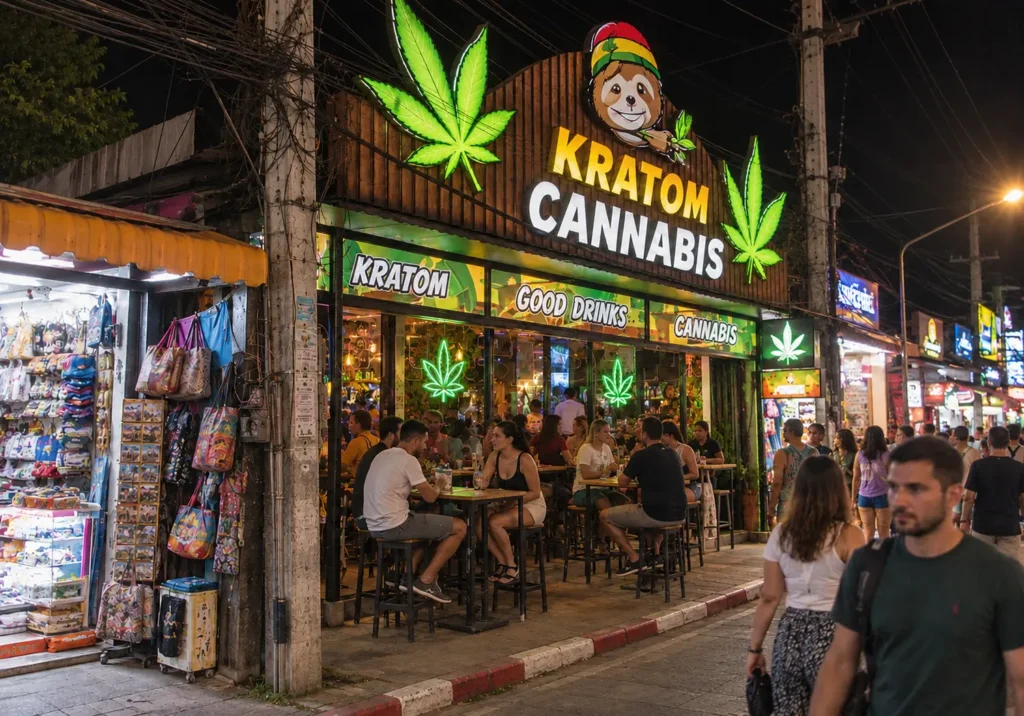
Kratom has been legal in Thailand since August 24, 2021, when the plant was removed from the country’s Category 5 narcotics list. Kratom in Thailand is now legal for adults to grow, buy and drink, yet several things around it remain offenses: mixed drinks such as 4×100, sales to certain groups, and carrying the leaf into countries that ban it. Travelers usually want to know what they can buy without trouble. Daily kratom tea drinkers more often want to know why stopping feels harder than expected, and both answers depend on where the legal and medical lines sit.
Kratom is legal in Thailand for adults to grow, possess and use, because the Narcotics Act (No. 8) removed the plant from the Category 5 narcotics list on August 24, 2021. The Kratom Plant Act still bans sales to anyone under 18 and to pregnant or breastfeeding women, and it bans consuming kratom mixed with narcotic or psychotropic substances. Thai legal status does not travel with the leaf, since Australia lists kratom as a prohibited Schedule 9 substance.
Is Kratom Legal in Thailand?
Yes, kratom is legal in Thailand: adults may grow, buy, possess and drink plain kratom leaf, because the plant left the Category 5 narcotics list in August 2021. Legal use still has limits. Sellers cannot sell to minors or to pregnant or breastfeeding women, and drinking kratom mixed with narcotic or psychotropic drugs remains an offense.
Two agencies now share oversight of kratom in Thailand. The Office of the Narcotics Control Board licenses imports and exports of the leaf, while the Thai FDA registers kratom food, supplements and herbal products. The Kratom Plant Act, in force since August 2022, bars sales of plain leaf in schools, dormitories, parks and vending machines, and a joint ministerial announcement added a ban on street stalls and mobile vendors from October 12, 2025. Before buying a packaged product, check that it carries a Thai FDA registration.
What Kratom Is and How It Is Used in Thailand
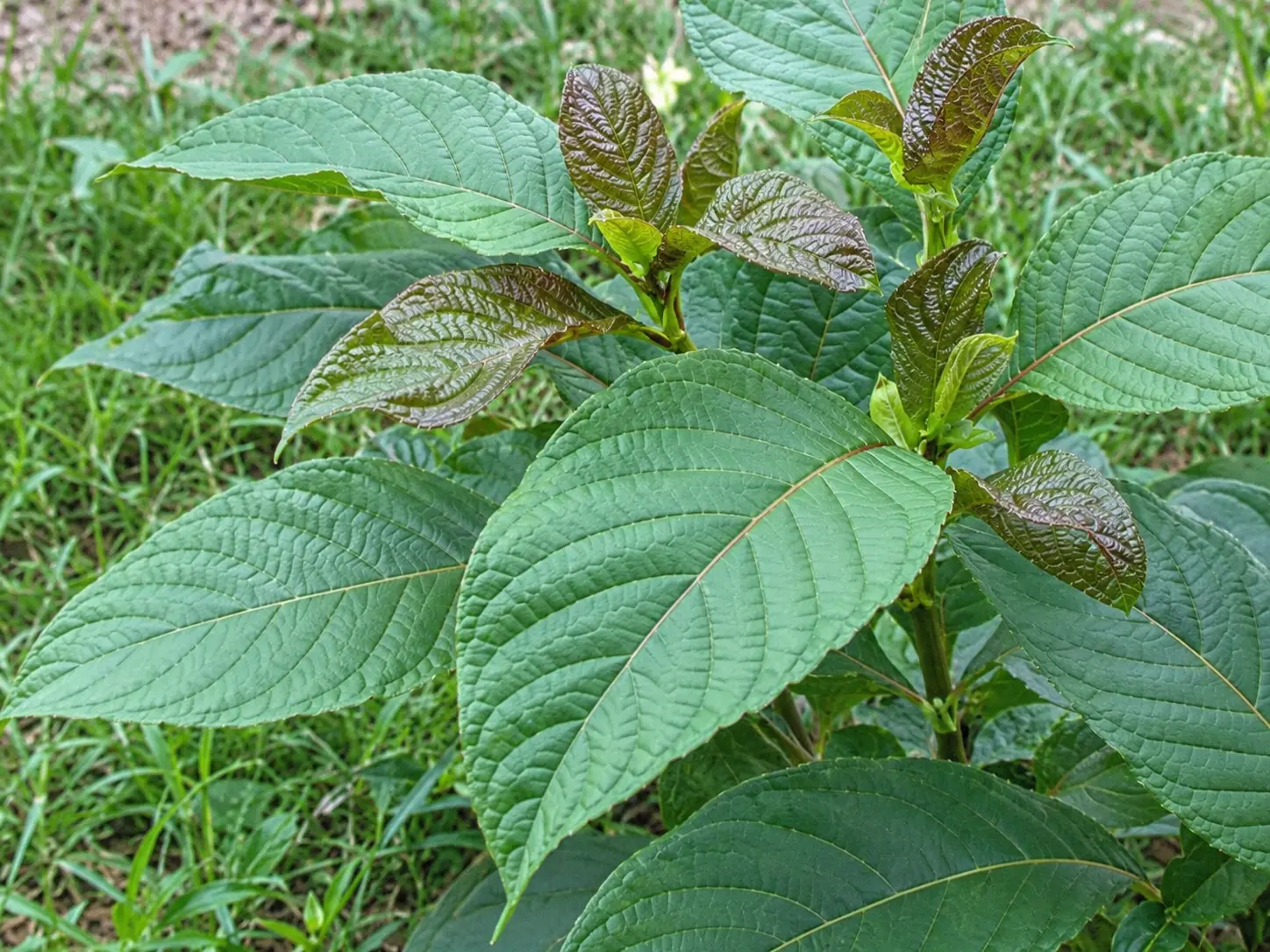
If you are offered kratom in Thailand, you are being offered the leaf of Mitragyna speciosa, a tree native to Southeast Asia. Research on Thai users describes traditional use as chewing fresh leaves as part of village life, mainly in the southern provinces. Today it is also sold as tea and as powder.
Kratom works on the same brain receptors as opioid painkillers, which is why its effects change with the amount taken. The National Institute on Drug Abuse kratom overview notes that kratom’s main compounds activate mu-opioid receptors, and that people commonly report stimulant-like effects at small doses and opioid- or sedative-like effects at larger ones. That split is why one person uses kratom to get through a long shift and another uses it to switch off at night.
Kratom and yaba are often mentioned together in Thailand, yet they are unrelated substances. Yaba is a methamphetamine tablet that remains a Category 1 narcotic under Thai law (see yaba addiction and its effects). Travelers who hear that kratom is legal sometimes assume Thailand has relaxed its drug laws in general, and it has not.
Where Kratom Is Sold in Thailand and What It Costs
Kratom in Thailand can now be sold legally only from fixed shops. Since October 12, 2025, street stalls and mobile vendors may not sell kratom leaves or kratom water. Sales within 1,000 meters of a school are also banned, with fines of up to THB 50,000 according to the Office of the Narcotics Control Board. Thai police also treat brewed kratom water as an herbal product that needs a production permit, which is why bottled drinks are a frequent target of raids.
Reported kratom prices in Thailand, by product and source:
Low prices change how kratom use grows. A daily habit at around 100 baht a bottle costs little enough that nothing financial signals a problem, so the first warning sign tends to be the dose rather than the spending.
Is 7-OH Stronger Than Kratom Leaf?
Question: Is 7-OH stronger than kratom leaf?
Answer: 7-OH (7-hydroxymitragynine) is stronger than kratom leaf, because 7-OH products concentrate a compound the body otherwise makes from the mitragynine in kratom. In July 2025 the US FDA recommended scheduling 7-OH products, and its commissioner said 7-OH can be more potent than morphine. The Thai FDA already prohibits adding 7-OH to kratom supplements.
Where Legal Kratom Still Gets People in Trouble
One recognizable situation: kratom capsules were bought openly in a Thai shop, and the rest went into a suitcase because the purchase felt legal. At the destination airport, the same capsules counted as a prohibited import. In Australia, kratom is a Schedule 9 prohibited substance, and the Australian Border Force warns that importing prohibited goods can lead to up to 10 years in prison.
Kratom legal status in Thailand compared with the main risk in each situation:
What 4×100 Is and Why It Stays Illegal
4×100 is a homemade Thai drink that news reports and Thai researchers describe as boiled kratom leaf mixed with cough syrup and cola, served over ice. The drink stays illegal because the Kratom Plant Act prohibits consuming kratom mixed with narcotic drugs or psychotropic substances. A buyer of an unlabeled bottle has no way to check what the syrup in it contains.
Is It Illegal to Travel With Kratom?
Question: Is it illegal to travel with kratom?
Answer: Traveling with kratom is legal when leaving Thailand with a personal amount, but it can be illegal on arrival, because the destination country’s law decides. Thailand exempts personal-use quantities from its kratom export license, while Australia classifies kratom as a prohibited Schedule 9 substance. Before packing any leaf, capsule or powder, check the import rules of the country you are flying to.
Will You Fail a Drug Test After Kratom?
Kratom does not typically show up on a routine drug test, according to a StatPearls clinical review of kratom, because standard screening panels are not set up to detect mitragynine. Laboratories can still identify kratom with targeted testing, so a test ordered specifically for kratom will find it. If you also carry prescription medicines, the separate rules in the guide to bringing medication into Thailand apply to them.
If you now take kratom every day, the legal questions are the smaller risk. Withdrawal follows regular use, not occasional cups of tea. Count how many days you used kratom last month before deciding anything else.
When Regular Kratom Use Becomes Dependence
Kratom can lead to opioid-type dependence and withdrawal because its main compounds activate the same mu-opioid receptors as opioid painkillers, and the brain adapts to that daily input. When regular kratom use stops, people can experience withdrawal symptoms that research summarized by the National Institute on Drug Abuse describes as mild to moderate, while only a minority of users develop a substance use disorder.
The traditional image of kratom makes dependence easy to miss, because a habit that looks like a farm worker’s tea break can still produce cravings once it stops. The FDA lists patterns reported in kratom users who meet substance use disorder criteria: using more than intended, using for longer than intended, and craving kratom between doses.
A second contradiction catches people who started kratom to get off opioids. The FDA notes that kratom is often used to self-treat opioid withdrawal, and some users end up with a new daily dependence on the same receptors, a pattern close to opioid addiction and its treatment. Left alone, doses tend to grow to hold the same effect, and some users move to stronger extracts or add alcohol or sedatives to sleep.
What to Do If You Cannot Stop Using Kratom
Get a medical assessment before you cut down. The safest pace depends on how much kratom you use, for how long, and what else you take. One familiar situation: a daily kratom tea habit was stopped abruptly before a family visit, the first nights brought little sleep and strong cravings, and the plan lasted only until the visit ended.
The National Institute on Drug Abuse notes that there are no approved medications specifically for kratom withdrawal, so care focuses on managing symptoms and on why daily use started. A medically supervised detox program is the usual setting when withdrawal looks difficult or other substances are involved.
If you use kratom a few times a week and can skip days without cravings or poor sleep: stop buying it and track one full month without it.
If you use kratom daily, have tried to stop and could not, or also use alcohol, sedatives or opioids: arrange a medical detox assessment. Siam Rehab in Chiang Rai, a licensed private residential treatment facility, offers psychiatric assessment and medically supervised detox before residential treatment.
Kratom in Thailand FAQ
Is kratom legal in Thailand for tourists?
Kratom is legal in Thailand for adult tourists on the same terms as for Thai citizens, so buying, possessing and drinking plain kratom is not an offense. Tourists are still bound by the ban on 4×100-type mixes with narcotic or psychotropic drugs, and by their home country’s rules if they fly out with leftover kratom.
Does Thailand sell kratom?
Thailand sells kratom legally in fixed shops, as fresh leaf and as products registered with the Thai FDA. Since October 2025, street stalls and mobile vendors may not sell kratom leaves or kratom water. Sellers must not sell to people under 18 or to pregnant or breastfeeding women, and must display a warning sign.
Is kratom an opioid or opiate?
Kratom is not an opiate, because it does not come from the opium poppy, but research describes its alkaloids as partial agonists at mu-opioid receptors. That receptor activity explains why kratom can relieve pain and cause opioid-type dependence, while research suggests its signaling differs from morphine-type drugs in ways that may produce fewer typical opioid side effects.
Which countries ban kratom?
Several countries ban kratom outright or control it as a drug, and the list changes often. Australia classifies kratom as a prohibited Schedule 9 substance, while in the United States legality differs by state and federal regulators are moving against concentrated 7-OH products. Check the destination country’s customs authority before traveling with any kratom product.
Has Kratom Become Something You Cannot Skip a Day Without?
Siam Rehab’s admissions team can review your kratom use with you and advise whether a medical detox assessment is the right next step.